Pilates is having a real moment right now. ClassPass named it the number one workout of the year, two years running, and its 2024 Look Back Report showed bookings jumped 84% over the year before. The Health & Fitness Association’s 2025 consumer report found Pilates participation among U.S. gym members climbing past 8%, up from a much smaller slice just a few years back, while overall U.S. fitness facility membership hit a record 77 million people in that same stretch. Xponential Fitness, the company behind Club Pilates, added roughly 300 new studio locations worldwide in a single push in late 2025. Reformers are showing up in living rooms the way treadmills used to. And Gen Z, in particular, seems to be driving a lot of this, drawn as much to the mind-body side of it as to the physical results.
All that growth is great news for the method Joseph Pilates spent his life building. But here’s the catch: it also means two very different groups of people are bumping into the same confusing word at the same time. If you’re looking for a studio to take lessons at, you’ve probably noticed that “Pilates” covers a lot of ground. A mat class at the gym. A sweaty reformer flow set to pop music. A slow, precise private session on equipment that looks almost antique. They can’t all be the same thing, right? And if you’re thinking about becoming an instructor yourself, you’re facing an even bigger version of that same problem: dozens of schools, wildly different hour requirements, and certificates that all say “certified” without meaning remotely the same thing.
Both of those headaches trace back to one simple fact that tends to catch people off guard: anyone can legally call anything “Pilates.” This guide walks through what that actually means for both groups, whether you’re shopping for lessons or shopping for a teacher-training program, where all this confusion came from, and how to tell what you’re really getting into either way.
If you just want the real thing: a quick synopsis
If all of this is more history than you need and you just want to find authentic Pilates, here’s the short version. Classical Pilates, the method as Joseph Pilates actually built it, really comes down to two checks: who’s teaching you, and what you’re training on.
In a teacher, look for:
- Authentic Pilates teacher training, not just a mat certificate. It should cover the full range of classical apparatus: the Reformer, Cadillac, Wunda Chair, Arm Chair, High Chair, Spine Corrector, small or baby barrel, Ladder Barrel, Pedi Pole, Guillotine Tower, push-up devices, Breath-a-cizer, bean bag, Foot Corrector, Toe Corrector, and Magic Circle. Not just floor work.
- A real hour count. Genuine classical certifications run 500 to 600-plus hours, built out of weekend intensives, observation, and supervised practice teaching over six months to a year or more. Not a weekend, and not a self-paced online course.
- A traceable lineage. Just ask who trained them. If they can name a specific person, ideally someone tracing back toward Romana Kryzanowska, Jay Grimes, or another first-generation Elder, that’s a good sign. A vague “I’m certified,” with no name attached, isn’t.
- Apprenticeship-style training. Real classical programs still involve a trainer watching and correcting actual bodies in real time. No video course can replace that.
In equipment, look for:
- Gratz Pilates, Legacy Pilates Apparatus, Pilates Designs, or Balanced Body’s Contrology line. These are all built to Joseph Pilates’ original dimensions and spring tensions.
- Be a little wary of steel-frame equipment with a bunch of adjustable footbar positions and a modern, gym-equipment look. That usually signals contemporary or fitness-oriented gear, which is fine for what it is, but it isn’t the classical apparatus. Here’s a quick visual tell for a Reformer specifically: contemporary models typically have risers built into the frame, colored springs, and often five springs instead of the classical four. Classical Reformers sit lower to the ground, use plain unplated or muted-tone springs, and stick to four.
- If a studio calls itself authentic Pilates, just ask what brand of equipment they use, and why. A studio that can answer that specifically has actually thought about what it’s offering. One that can’t is a red flag.
If both of those check out, the teacher and the equipment, you’re very likely looking at the real thing. The rest of this guide gets into why each of those checks matters, plus the deeper history and the full landscape of teacher-training options, if you want to go there.
The classical definition: Pilates as a complete, closed system
Joseph Pilates called his method Contrology, a full system of mental and physical conditioning built on breath, precision, control, centering, concentration, and flow. Those six ideas get taught today as “the Pilates principles,” but here’s a fun bit of trivia: they weren’t actually Joe’s own words for his work. They were codified in 1980, thirteen years after he died, by Philip Friedman and Gail Eisen, two students of Romana Kryzanowska, in the first modern book written about the method. Romana carried the work forward after Joseph Pilates died and trained the generation of teachers who still shape classical training today. But that tidy list of six principles came from her students putting his ideas into words, not from Joe himself.
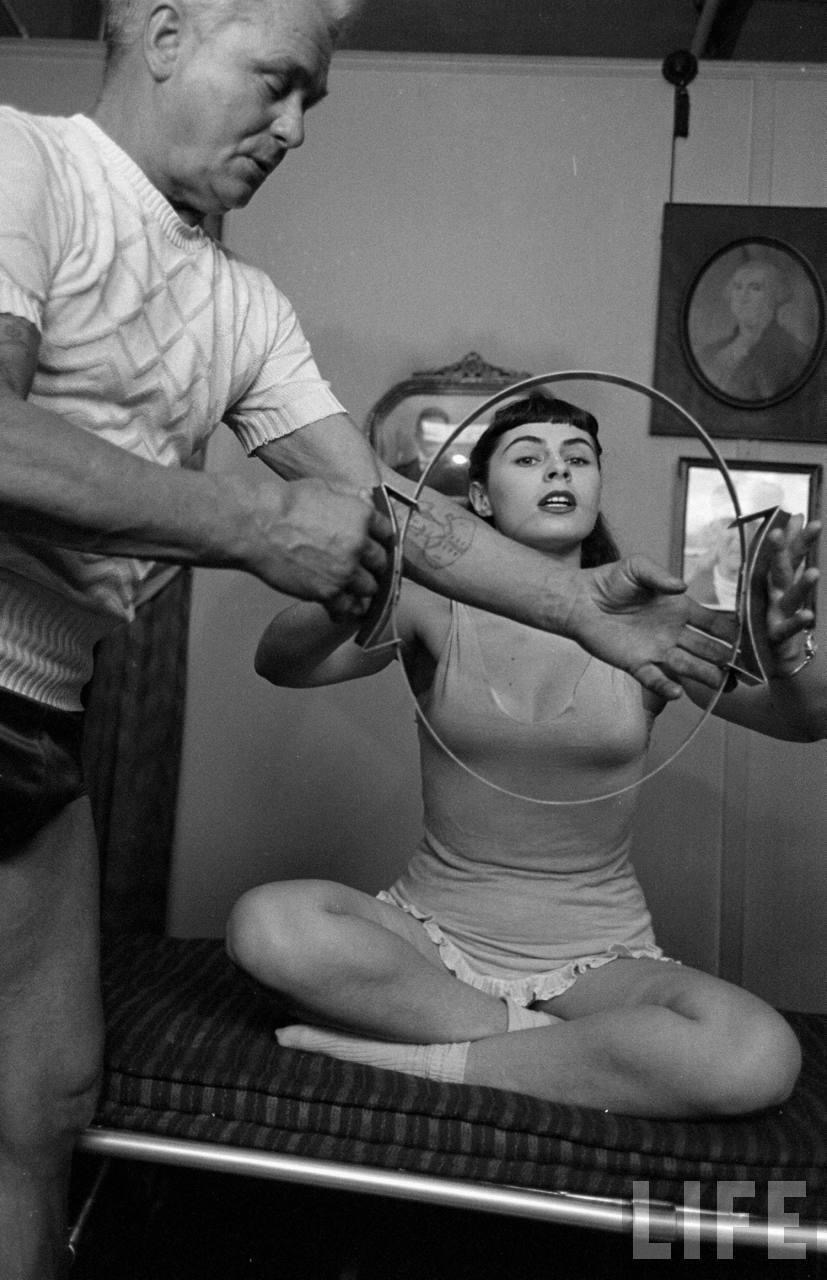
What Joe actually left behind was decades of hands-on refinement. He built a specific sequence of mat exercises and a specific family of apparatus designed to work together as one system: the Reformer, the Cadillac, the Wunda Chair, the Arm Chair, the High Chair, the Spine Corrector, the small barrel sometimes called the baby barrel, the Ladder Barrel, the Pedi Pole, the Guillotine Tower, various push-up devices, the Breath-a-cizer, the bean bag, the Foot Corrector, the Toe Corrector, and the Magic Circle, among other pieces. None of it was arbitrary. The order of the exercises, the transitions between them, and the equipment itself were all engineered to build the body progressively, with one exercise leading logically into the next.
That last part matters more than most people realize, whether you’re a student or a future teacher. A lot of what Pilates is famous for, being muscular but not bulky, the deep core control, the way it changes posture and how someone moves through the world, comes specifically from training on equipment built to Joe’s original angles, spring tensions, and dimensions. The springs on a classical Reformer are calibrated a certain way. The height of a Wunda Chair, the pitch of the Cadillac’s push-through bar, the exact resistance of the tower springs: Joseph Pilates tuned all of it himself, over years of working with real bodies, to get a specific training effect. You can change those dimensions, swap in different springs, or reorder the exercises, and you’ll probably still get a good workout. But you’re no longer working with the exact tool Joe built, or the exact system he built around it.
Pilates scholar and teacher trainer Peter Fiasca has become one of the method’s most outspoken defenders of this idea. He’s the author of Discovering Pure Classical Pilates and Voices of Classical Pilates. His core argument is that Joseph Pilates left behind a finished system, not a pile of raw materials for future instructors to tinker with. Fiasca actually calls “Contemporary Pilates” a contradiction in terms. In his view, the moment you start substituting exercises, changing the sequencing, or bringing in outside modalities, you’re no longer practicing the method Joseph Pilates created. You’re practicing something derived from it. Classical Pilates, in this framework, means preserving Joseph Pilates’ original exercises, order, and equipment as faithfully as possible, the way it was passed down through his first-generation students, most notably Romana.
You don’t have to agree with Fiasca’s stricter conclusions to find the underlying distinction useful. It reframes “classical” not as an aesthetic or a marketing label, but as a claim about fidelity to a specific, traceable lineage, right down to the dimensions of the equipment. Whether you’re choosing where to take lessons or where to train as a future teacher, this is the distinction everything else in this guide builds on.
Contemporary Pilates: the physical therapy influence
“Contemporary Pilates” grew out of Joseph Pilates’ original work after he died in 1967, largely through physical therapists and rehab specialists who picked up the apparatus for clinical use. That lineage is why contemporary Pilates looks the way it does. Instead of teaching the full classical repertoire in its original order, contemporary practice tends to treat the Pilates equipment more like a toolbox for targeted rehab exercises, pulling individual pieces of the system to fit a specific injury or condition rather than delivering the full expression of the method. Sequencing bends to fit what an individual client needs rather than following Joe’s original order, and clinical assessment tools from physical therapy get folded into how instructors evaluate and progress a client. Brands like Merrithew’s STOTT Pilates were built explicitly around this model, developed with physiotherapists to serve rehab and post-injury populations.
It’s also worth knowing that contemporary Pilates is usually taught on contemporary equipment: think Balanced Body, Merrithew, or similar modernized reformers, chairs, and towers, rather than gear built to Joseph Pilates’ original dimensions. That’s a real part of the difference, not just a matter of teaching style. A studio can call itself contemporary and still be excellent. It just isn’t the classical, authentic Pilates system, not in its exercises and not in its apparatus, and it shouldn’t be marketed as if it’s interchangeable with it.
This isn’t a lesser version of Pilates. Think of it more as a different orientation. It’s made the method genuinely useful for injury recovery, pregnancy, and populations that a poorly taught classical class might struggle to accommodate. That said, the classical system itself isn’t incapable of handling post-rehab or special-needs clients. Joe’s original repertoire actually includes modifications and progressions for exactly this kind of work. A classical teacher with authentic Pilates teacher training, someone who’s logged real hours on special-population cases during their apprenticeship, can adapt the full classical system safely for someone recovering from injury or surgery. The gap shows up when the teacher’s own training didn’t cover that material, not because classical Pilates itself can’t do it. Still, “contemporary” and “clinical” or “rehab-focused” are closely linked for a reason, and it is a different product from the classical system, in both its exercises and its equipment. If you’re a student recovering from an injury, look for either a contemporary studio built around rehab, or a classical instructor with real training and experience in special populations. Don’t just assume classical is off the table. And if you’re choosing where to train as a teacher, contemporary and classical remain different curricula with different skill sets, not a shortcut from one to the other, though authentic Pilates teacher training does typically include instruction on modifying the system for injuries and special cases.
There’s a further step down from the PT-influenced version, and it’s worth naming directly because it’s so common. A lot of group fitness studios built around Pilates equipment aren’t really teaching a modified version of the method so much as leaving the method out entirely. Running a full classical sequence with a room full of clients at different levels takes real skill, and plenty of group instructors just haven’t been trained to do it safely. So the original order gets dropped, exercises get skipped or swapped for whatever keeps the room moving together, and instructors often end up improvising entirely new movements on equipment Joseph Pilates never designed or taught. What’s happening in that room is fitness exercise performed on Pilates equipment, not Pilates in any systematic sense, even if it’s marketed under the same name. It can still be a good workout. It just isn’t the method, and honestly, it isn’t really contemporary Pilates either, since there’s usually no clinical or rehab framework behind it at all. It’s simply fitness that borrows the equipment.
Why “Pilates” isn’t legally protected: the lawsuit that changed everything
A lot of people assume there must be some regulatory body somewhere, deciding who gets to use the word “Pilates” or who’s qualified to teach it. There isn’t. And there’s a specific legal reason why, one that matters whether you’re picking a studio or picking a school to train at.
In the early 1990s, a man named Sean Gallagher acquired trademarks covering the terms “Pilates” and “Pilates Studio.” He claimed they’d passed down to him through a chain going back to Romana Kryzanowska. Starting in 1992, he sent cease-and-desist letters and filed lawsuits against Pilates instructors around the country, and in 1996 he sued Balanced Body and its founder, Ken Endelman, one of the largest Pilates equipment manufacturers in the world, demanding licensing fees or a halt to their use of the name.
The case dragged on for four years and ended in an eleven-day trial. On October 19, 2000, U.S. District Judge Miriam Cedarbaum handed down a 93-page ruling that invalidated Gallagher’s trademarks entirely. Her reasoning: “Pilates” functions the same way “yoga,” “karate,” or “aerobics” does. The public understands it as the name of a method of exercise, not a brand, and you simply can’t monopolize a generic term like that. The court also found that Gallagher had misled the U.S. Patent and Trademark Office with false claims in his original applications, and she ordered the trademarks canceled.
That ruling is the direct reason there’s no legal body today that can define, license, or restrict who calls their exercises “Pilates.” There’s no requirement that what’s being taught bears any resemblance to what Joseph Pilates actually created. Anyone can name a studio, a class, or a certification “Pilates,” teach whatever they want in it, and be entirely within their legal rights. The same freedom applies to teacher training, too: any school can call its program “comprehensive” or “certified” with no outside body checking that claim. The word is free precisely because a court decided it belongs to everyone. Which also means it belongs to no one in particular, and there’s no built-in consumer protection attached to it for a student or a future instructor.
How Romana trained the next generation
Before there were dozens of certifying organizations, there was one studio and one woman keeping the method alive. After Joseph Pilates died in 1967, Romana Kryzanowska ran his original studio and, eventually, built her own apprenticeship program to train the next generation of teachers. There was no manual to follow and no shortcut available. Learning the method meant showing up at the studio, watching Romana and other senior teachers work with real clients for hundreds of hours, getting corrected constantly, and practicing the exercises on your own body until they became second nature. Only then were you allowed to start teaching, and even then, only under close supervision.
Programs that trace their lineage directly back to Romana still describe this as an apprenticeship, not a course. It still runs on a 600-hour minimum, built from stages of observation, personal practice, and supervised teaching before certification is granted. It was, and in the programs that preserve it still is, entirely in person. You can’t apprentice by video. The whole model depends on a trainer watching your hands, your cueing, and your client’s body in real time, correcting it on the spot. That’s a big part of why classical training has always taken so much longer than a typical fitness certification, and it’s the benchmark every modern program below is still measured against.
The people who carried the lineage forward
Understanding classical Pilates really means understanding who taught it, generation by generation, because “trained by a direct student of so-and-so” is a real credential in this field in a way it just isn’t in most fitness disciplines.
First-generation teachers, often called “Elders,” studied directly with Joseph and Clara Pilates at the original studio. The best-known names are Romana Kryzanowska, Kathy Stanford Grant, Carola Trier, Eve Gentry, Ron Fletcher, Lolita San Miguel, Mary Bowen, Bruce King, and Jay Grimes. Only two people, notably, were ever formally certified to teach the method by Joseph Pilates himself: Kathy Grant and Lolita San Miguel, both certified on February 2, 1967, through a program administered by the State University of New York. Sonjé Mayo is also considered first-generation by some in the field, since she personally took mat sessions with Joseph Pilates starting around 1964 or 1965, and later with Clara and Romana, before his death in 1967, even though she wasn’t part of that small formally certified group. Her inclusion is a good example of how the line between first and second generation isn’t always a clean one.
Ron Fletcher deserves a specific callout for his own role, and it’s worth being precise about it. He came to Joseph and Clara’s studio in 1948 with a knee injury, and after overcoming a struggle with alcoholism with Clara’s support, he went on to open the Ron Fletcher Studio for Body Contrology in Los Angeles in 1972, five years after Joe’s death. It was Clara, not Joe, who gave him her personal blessing to carry the work forward, and Fletcher genuinely modified and added to the method rather than simply preserving it as he’d learned it. He was the first to teach standing exercises within the method, and he developed a percussive breathing style distinct from Joe’s own. He also created two techniques that still bear his name, Fletcher Towelwork and Fletcher Barrework, drawing partly on his years as a Martha Graham dancer and on another mentor, Yeichi Imura. None of that innovation was something Joseph Pilates himself signed off on, since he was no longer alive to do so. It’s a useful early example of exactly the tension this guide keeps coming back to: even a direct, first-generation student, working with Clara’s encouragement, was already expanding beyond Joe’s original system within a few years of his death. Where exactly that lands Fletcher’s work in the classical-versus-contemporary split is genuinely debated in the field, but given how far he departed from Joe’s original repertoire, order, and breathing style, the more accurate label is an in-between one: Fletcher is best understood as the starting point of the shift toward contemporary Pilates, rather than as classical Pilates itself. His modifications didn’t come from the physical-therapy lineage that defines most contemporary Pilates elsewhere in this guide. They came from his own dance and movement background instead. But by the strict fidelity standard this guide uses for “classical,” adding new exercises and a new breathing style that Joe never taught and never approved doesn’t qualify as classical either, regardless of Fletcher’s direct lineage to Joe and Clara. Fletcher Pilates today describes its own approach as “both classical and contemporary,” which is really an acknowledgment of this same in-between position: rooted in a first-generation Elder’s direct training, but already meaningfully departed from Joe’s closed system by the time Fletcher opened his own studio. Fletcher also helped bring Pilates into mainstream awareness by demonstrating it on The Phil Donahue Show. Fletcher Pilates, the teacher-training program built on his name and lineage, still teaches this fuller history today.
As of this writing, how many Elders are still living depends a bit on whose list you use, but two names come up consistently.
- Lolita San Miguel, born in 1934, is still active. Of the two people Joe personally certified, she’s the one who went on to build an actual standing, formal teacher-training pipeline: her Pilates Master Mentor Program, launched in 2009, and Lolita’s Legacy, a comprehensive 500-hour teacher-training program she introduced a few years later, now taught internationally by a small group of “Legacy Educators” she personally trained and chose. Kathy Grant, by contrast, never built anything comparable, which is part of why the two Elders’ influence looks so different today. San Miguel also continues to organize the Pilates Heritage Congress. Some sources actually describe her as the last living first-generation instructor.
- Mary Bowen, born in 1930 and based in Connecticut, is the most senior Elder by age. She studied with Joe and Clara twice a week for six and a half years starting in 1959 and taught for decades afterward, though recent reports suggest she’s paused or scaled back active teaching in her later years.
A less commonly cited but well-documented name is Anna Shaffer, also known as Anna Woolley Shaffer. She began studying with Joseph Pilates in 1950 at just 16 years old and continued for roughly 16 years. As of a few years ago she was still teaching Pilates barre and chair classes in Florida into her mid-80s, though her current status isn’t widely reported. Whether she’s included among “the Elders” varies by source, which says something about how informally this lineage has historically been tracked, outside the handful of names with their own famous schools.
Romana Kryzanowska died in 2013, and Jay Grimes, one of the most widely cited “teacher’s teacher” of the classical method, died in July 2024. With Jay’s passing, direct living access to a first-generation teacher has narrowed considerably, which is a big part of why the second generation has become the primary living link to Joe’s work.
Second-generation teachers studied under the first-generation Elders, most commonly under Romana or Jay Grimes, rather than with Joseph or Clara Pilates directly. A lot of them now run their own teacher-training programs and are the names apprentices most often run into today. One caveat before diving in: exact certification years just aren’t publicly documented for most of these teachers. So this list starts with the names whose timeline with Romana is actually on record, roughly in order, then groups everyone else afterward rather than guessing at dates that aren’t public.
Teachers with a documented start date under Romana, sorted by when they actually began training with her (a few entries lean on a later milestone instead, like a certification or studio-founding year, when that’s the only public date available):
- Sari Mejia Santo is Romana’s daughter. She grew up around the original studio, worked directly with Joseph and Clara Pilates as a teenager, and has taught alongside her mother for more than three decades, making her connection to the lineage the earliest and most continuous of anyone on this list.
- Steve Giordano ran the Pilates studio at SUNY Purchase from at least the mid-1970s and became a real hub for bringing new students to Romana, most notably introducing both Cary Regan in 1975 and Sean Gallagher in 1984 or 1985 to her. He later trained instructors including Ellie Herman and Lynda Lippin, and helped design equipment for The Pilates Center in Boulder and for Peak Pilates, including its Tower and its fold-out convertible reformer and tower units. His exact certification date isn’t publicly documented, but his long tenure at SUNY Purchase puts him among the earliest in this generation.
- Cary Regan began training in the Pilates method under Romana in 1975 while a dance student at SUNY Purchase, then continued at the original Pilates Studio in New York and has been teaching the method since 1981, making her one of the earliest-documented students still active in the field.
- Dorothee Vandewalle began working side-by-side with Romana in New York around 1980, before there was even a formal certification program in place, describing it as a true apprenticeship. She later moved to Seattle and started teaching there in 1993, eventually founding her own M.A.T. Pilates Teacher Certification Program.
- Bob Liekens began training directly under Romana in 1983 and started teaching at her studio in 1986. Starting in 1993, he worked one-on-one with Romana for roughly two years to help write the first formal classical Pilates teacher training manuals, going through the entire exercise repertoire one by one, and helped originate the exam system that structured programs still use today. He went on to help found Power Pilates and later co-founded The Pilates Standard before his death in 2018.
- Alycea Ungaro took her first Pilates session in 1982 and studied the method for a full decade before ever meeting Romana. She trained to teach under Romana starting in 1993, the same year she was originally part of the manual-writing process alongside Bob Liekens, and became a licensed physical therapist in 1998. She founded her Real Pilates studios in New York in 1996 and went on to build its teacher-training program, alongside a career as a bestselling author.
- Amy Taylor Alpers and Rachel Taylor Segel, sisters, began studying with Romana in early 1987 at The Pilates Studio in New York and trained with her for three years before founding The Pilates Center in Boulder, Colorado, in 1990. Romana kept traveling there to teach until 1993.
- Juanita Lopez began her study of the Pilates method in 1988 and has since worked closely with Romana and Sari as an Instructor Trainer, teaching many of the certification seminars.
- Howard Sichel and Phoebe Higgins founded Power Pilates in 1989, after the original 939 Eighth Avenue studio closed and they salvaged its equipment, building one of the field’s major authentic Pilates teacher-training organizations around it.
- MeJo Wiggin began studying with Romana in 1990, working along the way with other master teachers including Sari Mejia Santo, Kathy Grant, Jay Grimes, and Bob Liekens. She started teaching alongside Romana at Drago’s Gym in 1995 and was certified by Romana in 1996, after which she opened her first fully equipped Pilates studio in Greenwich, Connecticut. She was later handpicked and certified again by Romana in 2003 as a Level III Teacher Trainer for the newly formed Romana’s Pilates.
- Kathi Ross-Nash, also known as Kathryn Ross-Nash, is most often cited as beginning her classical Pilates training in 1982, but the fuller picture is a bit more complicated. Her own account describes starting to teach around age 30, right before she became pregnant with her son, and her teaching career seems to have developed with a real gap for raising her children (a son and a daughter) before it took off in earnest. That later timeline lines up with 1992, when she opened her own American Body Tech Pilates Studio, by which point she’d become a Romana’s Pilates Level 2 Trainer and founding Vice President of the Authentic Pilates Guild under Romana. She studied along the way with Romana, Kathy Grant, Sari Mejia Santo, Jay Grimes, and Edwina Fontaine.
- Cynthia Lochard began learning the Pilates method in 1976 as a young dancer with the New York City Ballet, practicing at Joseph Pilates’ original studio alongside Romana, though her path wasn’t exactly continuous: she moved to Sydney by 1987 and spent several years dancing professionally there before returning to New York in 1994 to formally train and certify as an instructor under Romana. She went on to open the first Authentic Pilates teacher-training program in Sydney in 1998 and became one of only a handful of Grand Master Teacher Trainers worldwide in 2009. She’s now named alongside Sari Mejia Santo and Juanita Lopez as one of the handpicked instructor-trainers who mentor and guide new teacher trainers within Romana’s Pilates International.
- Darien Gold was introduced to the method in 1992 and completed her Pilates certification with Romana in 1997.
- Brett Howard enrolled in the New York Pilates Studio Teacher Certification Program in the fall of 1997 as a dance student, after Sean Gallagher offered him and three classmates scholarships, and was certified under Romana in 1998. He went on to become a Teacher of Teachers for the program in 2003 and co-founded the United States Pilates Association with David Freeman in 2005, which continues today as Classical Pilates USA.
- Jerome Weinberg, who trained at Drago’s Gym around the same period as MeJo Wiggin and Brett Howard, was certified by Romana in 1998, the same year as Howard. He also studied along the way with other master teachers, including Jay Grimes, though his certification itself came from Romana. He spent the following five years traveling the world with her, assisting and demonstrating at her workshops and seminars, and later appeared alongside Wiggin in Romana’s video projects, including Pilates Revealed and Romana on Pilates: The Legacy.
- Peter Fiasca took his first Pilates class in 1988 at Wee-Tai Hom’s studio in Manhattan, then pursued teacher training at Drago’s Gym alongside the same cohort as MeJo Wiggin, Jerome Weinberg, and Brett Howard, receiving his certification from Romana in 1998. He went on to study further with Jay Grimes and Kathy Grant, produced the Classical Pilates Technique DVD series with Alycea Ungaro, and authored Discovering Pure Classical Pilates and Voices of Classical Pilates.
- Moses Urbano began working with Romana at The Pilates Studio of New York in 1998 and completed his certification under her direction in 1999.
- Blossom Leilani Crawford was introduced to Pilates by first-generation Elder Kathy Grant in 1993, during her first year as a dance student at NYU’s Tisch School of the Arts, and became Grant’s teaching assistant three years later, a role she held from 1996 to 2007. With Grant’s encouragement, she went on to pursue private study with Romana and received her own Pilates teaching certification in 1999 after 600 hours of practice and observation, giving her a lineage that draws on both Elders. She opened Bridge Pilates in Brooklyn in 2006.
- David Freeman, a former attorney, began his Pilates training in New York in the mid-1990s and was certified as an Authentic Pilates Instructor by Romana in 1999 after more than 1,000 hours of training through the New York Pilates Studio Teacher Certification Program. In 2001 he opened the Pilates Institute of Fort Lauderdale at Romana’s request, and in 2005 he co-founded the United States Pilates Association with Brett Howard, which continues today as Classical Pilates USA.
Other frequently cited second-generation names include Alicia Zabrocki and her husband Doug Zabrocki, Brooke Siler, Chris Robinson, Jill Cassady, Juan Estrada, Junghee Kallander, Mari Winsor, Penelope Wyer, Simona Cipriani, and Siri Dharma Galliano, among others. This isn’t an exhaustive list, and different lineages, say, Jay Grimes’s “Vintage Pilates” line versus Romana’s various successor organizations, will point to somewhat different names as central. But if you’re sizing up a teacher-training program or a classical instructor’s background, recognizing names like these is a decent shorthand for how seriously that person’s training has been documented and vouched for within the classical world.
Teachers trained through Carola Trier and Kathy Grant. Nearly everyone in the list above traces back to Romana, but Trier and Grant built their own separate lineages worth knowing about, since they represent authentic classical training that didn’t run through Romana’s studio at all. Kathy Grant’s case is a bit different from Trier’s, though. There’s no record of Grant ever running a standing, formal teacher-certification program of her own. She spent most of her career teaching mat classes and mentoring students one-on-one, first at Carola Trier’s studio and Henri Bendel’s, then for decades at NYU’s Tisch School of the Arts. Several of her own students describe being profoundly shaped by her teaching but then having to go elsewhere to actually get certified: both Ellie Herman and Blossom Leilani Crawford were introduced to Pilates by Grant but pursued their formal instructor certification under Romana. The Kathy Grant Heritage Training program that exists today wasn’t hers either. It was created by her student Cara Reeser after Grant’s death in 2010, specifically to formalize and pass on what had otherwise lived only in Grant’s own hands-on mentorship.
Carola Trier’s situation turns out to be similar. By Lolita San Miguel’s own account, she apprenticed with Trier for 520 hours under a New York State University program and became, in her own words, “the only person that Carola Trier ever certified.” (San Miguel then went on to seek out Joseph Pilates himself for a second, direct certification.) Trier did have assistants working under her, including Romana Kryzanowska and Kathy Grant, and she genuinely mentored later teachers, but the people who passed through her studio mostly describe being taught or influenced by her rather than formally certified by her.
- Alan Herdman studied with Carola Trier and Robert Fitzgerald (a direct client of Joseph and Clara’s) in New York in 1970, then returned to London and opened Britain’s first Pilates studio, effectively founding the entire UK Pilates lineage from what he learned with them.
- Jillian Hessel went to work at Carola Trier’s studio in 1980, apprenticing directly under her and learning to teach on the very Cadillac that Joseph Pilates had built for Trier in 1960, which Trier later passed down to Hessel upon her 1988 retirement. Hessel also studied with Kathy Grant and Ron Fletcher, describing herself as a “hybrid of the masters,” which fits the pattern of a mentorship pieced together across several Elders rather than one formal certification.
- Ellie Herman was inspired to pursue Pilates after taking Kathy Grant’s mat classes at NYU in 1991, though her actual teacher training came directly from Steve Giordano and Romana. She went on to found EHS Pilates in San Francisco in 1992, invent the Pilates Springboard apparatus, and author ten instructional books on the method, making her lineage a blend of Grant’s inspiration and Romana’s certification.
- Blossom Leilani Crawford was introduced to Pilates by Kathy Grant in 1993 and served as her teaching assistant at NYU from 1996 to 2007, before pursuing further certification under Romana in 1999, giving her a lineage that draws on both Elders (her full entry is above, under the Romana-anchored list, since her formal certification came from Romana).
- Cara Reeser trained under Kathy Grant and now runs Heritage Training, a post-graduate program specifically built to preserve and pass on Grant’s vocabulary, philosophy, and teaching tools to already-certified Pilates professionals.
If you’re considering teacher training: hours, formats, and what “virtual” actually means
Modern Pilates schools have kept a version of that original rigor, but they’ve also had to adapt to a much bigger, more spread-out industry. Each one has landed in a slightly different place on hours and format. Here’s how seven of the major programs stack up.
- Real Pilates runs a 30-week, 600-hour authentic Pilates teacher training program built around four in-person weekend seminars plus a sustained weekly commitment of 18 to 22 hours covering practice teaching, observation, group classes, and private sessions at a host studio. It’s almost entirely hands-on and in person, with only limited online homework supplementing the studio hours.
- Power Pilates also runs a 600-hour authentic Pilates teacher training certification, delivered as weekend intensives plus monthly apprentice meetings, observation hours, and home study, completed over roughly 6 to 12 months depending on format. The core practical hours happen in the studio, on the apparatus, with a trainer present.
- Peak Pilates runs two distinct tracks now, which is worth knowing on its own. The Classical Comprehensive Certification is a roughly 655-hour, three-level program blending online coursework with in-person live training modules. Level I, for example, runs four live two-day modules over about four months, each built on top of online lecture material completed beforehand. Separately, Peak now offers FitCore, a contemporary “fusion” certification that blends Pilates mat, reformer, and chair work with bodyweight training, standing exercises, and dynamic stretching, aimed at fitness professionals rather than classical purists. FitCore can be completed virtually or in person in as little as 6 to 18 hours of live training per apparatus. It’s a legitimate credential for a fitness-forward group class, but it’s a fraction of the time and a totally different curriculum from Peak’s own classical track. The two shouldn’t get confused when you’re sizing up a program or an instructor’s background.
- STOTT Pilates, from Merrithew, is a modular, contemporary-method program built from individual courses and workshops rather than one continuous apprenticeship. Merrithew now offers many of its Intensive courses both in person and fully online, with practice hours logged independently outside of class time.
- BASI, short for Body Arts and Science International, runs an authentic Pilates teacher training program that now uses a “Flex” format: pre-recorded online lectures paired with eight in-studio modules covering discussion, exercise analysis, and hands-on practice. BASI also lets you complete up to half of the required 100 observation hours through its online video platform instead of in a physical studio.
- Balanced Body is one of the largest contemporary teacher-training organizations in the world, delivered through a modular course structure you can take at any of its hundreds of Authorized Training Centers globally, rather than one home studio. Coursework includes Movement Principles, three levels each of Mat and Reformer, plus Chair, Trapeze Table or Cadillac, and Barrels. Its Comprehensive Instructor Training typically totals somewhere in the 450 to 520-hour range depending on the training center, on top of separately logged practical hours, commonly cited as around 30 to 35 personal apparatus sessions, 20 to 45 observation hours, and 95 to 125 hours of supervised student teaching, though the exact split varies a bit by location. Balanced Body also runs short, standalone rehab-focused workshops, some as short as 4 to 8 hours, aimed specifically at physical therapists and PTAs, which reflects the same PT lineage that shapes contemporary Pilates generally. It also offers a bridge pathway for instructors already certified elsewhere.
- Fletcher Pilates occupies an interesting middle ground: it’s the only major teacher-training program actually endorsed by a first-generation Elder, since Ron Fletcher, who studied directly with Joe and Clara, is its namesake and source lineage. Its Matwork Intensive requires 30 live classroom hours plus 20 hours each of participation, observation, self-practice, and casework. Its full Comprehensive Program builds toward eligibility for the independent National Certified Pilates Teacher exam and generally requires a minimum of 450 or more hours, with a Bridge Program available for instructors who already hold authentic Pilates teacher training elsewhere. Fletcher’s program blends live in-person intensives and casework with a self-paced online component, giving students up to two years to finish the coursework, though the practical apparatus hours still happen in person.
The pattern across all seven is basically the same. Nobody’s gone fully virtual for the practical, hands-on portions of authentic Pilates apparatus training, because you genuinely can’t learn to spot a client’s alignment on a Cadillac through a screen. But the theory, anatomy, and lecture content, and in some programs a real chunk of the observation hours, have increasingly moved online. That’s not automatically a problem if you’re the one training. It just means the phrase “600-hour certification” no longer guarantees the same amount of in-person, hands-on apparatus time it used to. If you’re sizing up a program, it’s worth asking directly how many of its hours are live and in a studio versus self-paced and remote.
It’s also worth knowing that not every well-trained classical instructor comes out of one of these named schools at all. Plenty of certified teachers train entirely outside any corporate training center, through the same kind of individual apprenticeship model Romana herself started: a single studio owner who’s completed authentic Pilates teacher training, taking on an apprentice directly, one-on-one, with no franchise name or standardized curriculum attached. These programs can be every bit as rigorous as the corporate ones, sometimes more so, since the trainee is working under one experienced eye the whole time rather than bouncing through modules with different instructors. The tradeoff is there’s no brand name to check credentials against, so the questions in the checklist below (hours, structure, mentorship, lineage) matter even more when you’re sizing up this kind of independent training.
Why a weekend certificate doesn’t prepare you for a classical studio, whether you’re teaching or taking lessons there
Because “Pilates instructor” isn’t a licensed or standardized title, the amount of training behind that label varies enormously. And it matters a lot on both sides of the room, whether you’re deciding where to enroll in teacher training or deciding whose class to take.
At one end of the spectrum, you can earn a Pilates certification in a matter of weeks through a self-paced online mat course, roughly 8 to 10 weeks, covering floor-based exercises with no apparatus at all. Programs like this can turn out a perfectly competent group mat instructor, but graduates never touch the Reformer, Cadillac, Wunda Chair, Arm Chair, High Chair, Spine Corrector, small or baby barrel, Ladder Barrel, Pedi Pole, Guillotine Tower, push-up devices, Breath-a-cizer, bean bag, Foot Corrector, Toe Corrector, or Magic Circle. That’s the equipment classical Pilates is actually built around.
At the other end, authentic Pilates teacher training typically runs 500 to 600-plus hours over six months to a year or longer. It involves weekend intensives, apprentice and mentorship hours, required observation, supervised practice teaching, and exams covering anatomy, every piece of apparatus, and modifications for special populations, often with a mat certification required just to get started. Graduates of these programs have usually logged dozens of hours simply watching and being watched teach before they’re ever allowed to lead a paying client through a full workout.
Both of these paths can legally end with the exact same words on a certificate: “Certified Pilates Instructor.” But they don’t produce the same instructor. A rigorous studio grounded in the classical method, whether you’re applying to teach there or booking a session there, is looking for teachers who can read a body in real time, cue every piece of apparatus safely, understand the logic behind the full sequence, and adapt it correctly for special cases. None of that is something a short mat-only certificate is designed to teach. This is exactly the gap Fiasca points to when he says the method can’t be mastered by watching a DVD, taking a weekend course, or reading a manual. It takes sustained study with a well-trained teacher, ideally one with a direct lineage back to Joseph Pilates’ own students. And if that’s the kind of teacher you want to become yourself, it takes that same sustained study to get there.
This isn’t a knock on shorter programs for what they are. They’re a solid entry point for group mat fitness instruction. The problem only shows up when that credential gets presented, whether on purpose or not, as equivalent to authentic Pilates teacher training.
The equipment itself is a clue: who makes it
Because the word “Pilates” is unregulated, one of the most reliable signals of what kind of studio you’re walking into, whether you’re a student or a teacher scouting a place to work, is simply whose equipment is sitting on the floor.
Classical manufacturers build to Joseph Pilates’ original specifications, dimensions, and spring tensions.
- Gratz Pilates is the original manufacturer of Pilates apparatus, making equipment to Joe’s exact specs since the 1960s. Romana relied exclusively on Gratz for her own studios and training programs, and it’s still considered the gold standard among classical teachers.
- Pilates Designs, founded in 2007 by Sylvia Adamopoulos and the late Basil Blecher, is actually a U.S. manufacturer based in New York, not a European company as people sometimes assume. It’s a small independent shop that hand-builds equipment to preserve Joseph Pilates’ original designs, and it’s also produced collaborative classical lines with well-known second-generation teachers, including the Archival line developed with Kathi Ross-Nash and a Vintage line developed with Blossom Leilani Crawford.
- Legacy Pilates Apparatus is an independent manufacturer founded in Istanbul, Turkey in 2017 by Murat Berkin, a former ballet dancer and Pilates instructor. It isn’t affiliated with Balanced Body, despite the name overlap with Balanced Body’s own older “Legacy” reformer line. Legacy hand-builds its apparatus to classical dimensions and has grown quickly into a globally distributed classical brand, now exporting to dozens of countries.
- Contrology by Balanced Body is Balanced Body’s own classical line, developed with first-generation master teacher Jay Grimes to recreate the feel, dimensions, and spring tension of original studio equipment from the 1970s, right down to the unplated “muddy-feel” springs. Worth calling out separately from the rest of Balanced Body’s contemporary catalog below.
Contemporary and fitness-oriented manufacturers build modified, modernized, or more adjustable equipment.
- Balanced Body, founded in 1976 by Ken Endelman, the same Endelman from the 1990s lawsuit, is known for modernizing the original designs with more adjustability and a large accessory ecosystem. It’s the most widely used brand in professional studios worldwide, both classical-leaning and contemporary, though as noted above it also sells its own classical-spec Contrology line, and separately a “Legacy” reformer, distinct from its mainstream contemporary Reformers like the Allegro and Studio Reformer.
- Merrithew, the company behind STOTT Pilates, is a Canadian company founded in 1988, built around its own contemporary teacher training system with a strong biomechanics and rehabilitation focus.
- Peak Pilates is a major U.S. brand popular in the Romana’s Pilates and STOTT training lineages.
- BASI Systems takes a hybrid approach: contemporary manufacture with some classical influence.
- Various home and budget brands, like AeroPilates, make lighter, mass-market equipment for personal use rather than professional studio training.
None of these brands are “bad.” Balanced Body’s mainstream contemporary equipment and Merrithew equipment are well made and used by serious, well-trained instructors every day. But if a studio calls itself authentic Pilates and you notice steel-frame equipment with a dozen adjustable footbar positions, that’s worth a question, whether you’re deciding to book there or apply to teach there. If you’re specifically after the original method as Joe built it, Gratz, Pilates Designs, Legacy Pilates Apparatus, or Balanced Body’s own classical-spec Contrology line, taught by an instructor with authentic Pilates teacher training, is the clearest sign you’re in the right room. It’s also the equipment you’ll need real hours on if your own goal is to teach classical work.
Buyer beware: for students booking lessons
Because the term is unregulated at every level, the workout, the equipment, the instructor’s credential, the burden falls on you to ask questions before you commit your body and your money to a studio.
- Ask what “Pilates” means at this studio. Classical, contemporary, or fitness-on-equipment? A studio that can’t or won’t answer clearly is telling you something.
- Ask what equipment brand they use, and why. A studio that knows exactly why it chose Gratz over Balanced Body, or vice versa, has thought about what it’s offering.
- Ask about the instructor’s specific training. Not just “certified,” but authentic Pilates teacher training or mat-only, how many hours, which apparatus, who trained them, and how many of those hours were actually in person versus online.
- Don’t assume a franchise or fitness-chain brand implies classical rigor. Plenty of popular studio chains teach contemporary or fitness-hybrid formats, which is a perfectly legitimate business model, just not the same thing as classical training.
- A recognizable brand name on a certificate doesn’t guarantee the classical track. Even schools that offer rigorous classical training, like Peak Pilates, also sell much shorter fusion or fitness-oriented certifications under the same name. “Peak Pilates certified” alone doesn’t tell you which program someone actually completed, so it’s worth just asking directly.
Buyer beware: for people considering teacher training
The same lack of regulation cuts the other way if you’re the one about to invest months and thousands of dollars into becoming an instructor.
- Ask exactly how many hours are live, in-studio, and hands-on, versus self-paced online lecture or video-based observation. Two “600-hour” programs can differ enormously here, and it changes both how prepared you’ll actually be and how competitive your certificate looks when applying to a classical studio.
- Ask what you’ll actually be qualified to teach at the end. A mat-only or fusion certification like FitCore is real and useful, but it won’t qualify you to teach at a studio that expects authentic Pilates teacher training, and it shouldn’t be marketed as if it will.
- Ask about mentorship and observation structure, not just total hours. The original apprenticeship model worked because trainees got corrected constantly by experienced teachers watching real bodies. A program with minimal supervised practice teaching is missing the part that actually builds competence.
- Check the lineage. Programs that trace a direct line back to Romana Kryzanowska or another first-generation teacher aren’t automatically better, but that lineage is genuinely part of what classical studios look for when they hire.
- Decide what you actually want to teach before you enroll. Authentic Pilates teacher training, contemporary rehab-focused, and fitness-fusion are three different careers with three different training paths. Pick the wrong one and you’re paying for a second certification later.
- Remember there’s no governing body backstopping any of this, for you or for the school. No degree, no license, no regulator is going to step in if a program overstates what it prepares you for. The Pilates Method Alliance offers an independent certification exam, the NCPT, that sets a bar above any single school’s own standards, but it’s optional, not mandatory. It’s worth asking whether your program even qualifies you to sit for it.
The bottom line: follow the equipment
If you take just one thing from all of this, let it be this: follow the equipment. It’s the fastest, most honest signal in an industry with basically no other guardrails.
Classical equipment, meaning Gratz, Pilates Designs, Legacy Pilates Apparatus, or Balanced Body’s own Contrology line, is a strong sign you’re looking at rigorous, apprenticeship-style teacher training behind the instructor in front of you. Nobody builds or buys that equipment casually, and nobody teaches well on it without real hours logged under a trained eye.
Contemporary equipment, meaning Balanced Body’s mainstream line, Merrithew, or similar modernized reformers and chairs, usually points to one of two things. Either it’s a physical therapy extension of the method, built by and for rehab professionals to serve injury recovery and special populations, or it’s a fitness-based take on Pilates, built for group classes, accessibility, and a broader range of bodies and goals.None of these paths is better or worse in the abstract. They’re just different products, built by different manufacturers, taught through different training pipelines, suited to different goals. The word “Pilates” alone won’t tell you which one you’re gettinPilates is having a real moment right now. ClassPass named it the number one workout of the year, two years running, and its 2024 Look Back Report showed bookings jumped 84% over the year before. The Health & Fitness Association’s 2025 consumer report found Pilates participation among U.S. gym members climbing past 8%, up from a much smaller slice just a few years back, while overall U.S. fitness facility membership hit a record 77 million people in that same stretch. Xponential Fitness, the company behind Club Pilates, added roughly 300 new studio locations worldwide in a single push in late 2025. Reformers are showing up in living rooms the way treadmills used to. And Gen Z, in particular, seems to be driving a lot of this, drawn as much to the mind-body side of it as to the physical results.
All that growth is great news for the method Joseph Pilates spent his life building. But here’s the catch: it also means two very different groups of people are bumping into the same confusing word at the same time. If you’re looking for a studio to take lessons at, you’ve probably noticed that “Pilates” covers a lot of ground. A mat class at the gym. A sweaty reformer flow set to pop music. A slow, precise private session on equipment that looks almost antique. They can’t all be the same thing, right? And if you’re thinking about becoming an instructor yourself, you’re facing an even bigger version of that same problem: dozens of schools, wildly different hour requirements, and certificates that all say “certified” without meaning remotely the same thing.
Both of those headaches trace back to one simple fact that tends to catch people off guard: anyone can legally call anything “Pilates.” This guide walks through what that actually means for both groups, whether you’re shopping for lessons or shopping for a teacher-training program, where all this confusion came from, and how to tell what you’re really getting into either way.
If you just want the real thing: a quick synopsis
If all of this is more history than you need and you just want to find authentic Pilates, here’s the short version. Classical Pilates, the method as Joseph Pilates actually built it, really comes down to two checks: who’s teaching you, and what you’re training on.
In a teacher, look for:
- Authentic Pilates teacher training, not just a mat certificate. It should cover the full range of classical apparatus: the Reformer, Cadillac, Wunda Chair, Arm Chair, High Chair, Spine Corrector, small or baby barrel, Ladder Barrel, Pedi Pole, Guillotine Tower, push-up devices, Breath-a-cizer, bean bag, Foot Corrector, Toe Corrector, and Magic Circle. Not just floor work.
- A real hour count. Genuine classical certifications run 500 to 600-plus hours, built out of weekend intensives, observation, and supervised practice teaching over six months to a year or more. Not a weekend, and not a self-paced online course.
- A traceable lineage. Just ask who trained them. If they can name a specific person, ideally someone tracing back toward Romana Kryzanowska, Jay Grimes, or another first-generation Elder, that’s a good sign. A vague “I’m certified,” with no name attached, isn’t.
- Apprenticeship-style training. Real classical programs still involve a trainer watching and correcting actual bodies in real time. No video course can replace that.
In equipment, look for:
- Gratz Pilates, Legacy Pilates Apparatus, Pilates Designs, or Balanced Body’s Contrology line. These are all built to Joseph Pilates’ original dimensions and spring tensions.
- Be a little wary of steel-frame equipment with a bunch of adjustable footbar positions and a modern, gym-equipment look. That usually signals contemporary or fitness-oriented gear, which is fine for what it is, but it isn’t the classical apparatus. Here’s a quick visual tell for a Reformer specifically: contemporary models typically have risers built into the frame, colored springs, and often five springs instead of the classical four. Classical Reformers sit lower to the ground, use plain unplated or muted-tone springs, and stick to four.
- If a studio calls itself authentic Pilates, just ask what brand of equipment they use, and why. A studio that can answer that specifically has actually thought about what it’s offering. One that can’t is a red flag.
If both of those check out, the teacher and the equipment, you’re very likely looking at the real thing. The rest of this guide gets into why each of those checks matters, plus the deeper history and the full landscape of teacher-training options, if you want to go there.
The classical definition: Pilates as a complete, closed system
Joseph Pilates called his method Contrology, a full system of mental and physical conditioning built on breath, precision, control, centering, concentration, and flow. Those six ideas get taught today as “the Pilates principles,” but here’s a fun bit of trivia: they weren’t actually Joe’s own words for his work. They were codified in 1980, thirteen years after he died, by Philip Friedman and Gail Eisen, two students of Romana Kryzanowska, in the first modern book written about the method. Romana carried the work forward after Joseph Pilates died and trained the generation of teachers who still shape classical training today. But that tidy list of six principles came from her students putting his ideas into words, not from Joe himself.
What Joe actually left behind was decades of hands-on refinement. He built a specific sequence of mat exercises and a specific family of apparatus designed to work together as one system: the Reformer, the Cadillac, the Wunda Chair, the Arm Chair, the High Chair, the Spine Corrector, the small barrel sometimes called the baby barrel, the Ladder Barrel, the Pedi Pole, the Guillotine Tower, various push-up devices, the Breath-a-cizer, the bean bag, the Foot Corrector, the Toe Corrector, and the Magic Circle, among other pieces. None of it was arbitrary. The order of the exercises, the transitions between them, and the equipment itself were all engineered to build the body progressively, with one exercise leading logically into the next.
That last part matters more than most people realize, whether you’re a student or a future teacher. A lot of what Pilates is famous for, being muscular but not bulky, the deep core control, the way it changes posture and how someone moves through the world, comes specifically from training on equipment built to Joe’s original angles, spring tensions, and dimensions. The springs on a classical Reformer are calibrated a certain way. The height of a Wunda Chair, the pitch of the Cadillac’s push-through bar, the exact resistance of the tower springs: Joseph Pilates tuned all of it himself, over years of working with real bodies, to get a specific training effect. You can change those dimensions, swap in different springs, or reorder the exercises, and you’ll probably still get a good workout. But you’re no longer working with the exact tool Joe built, or the exact system he built around it.
Pilates scholar and teacher trainer Peter Fiasca has become one of the method’s most outspoken defenders of this idea. He’s the author of Discovering Pure Classical Pilates and Voices of Classical Pilates. His core argument is that Joseph Pilates left behind a finished system, not a pile of raw materials for future instructors to tinker with. Fiasca actually calls “Contemporary Pilates” a contradiction in terms. In his view, the moment you start substituting exercises, changing the sequencing, or bringing in outside modalities, you’re no longer practicing the method Joseph Pilates created. You’re practicing something derived from it. Classical Pilates, in this framework, means preserving Joseph Pilates’ original exercises, order, and equipment as faithfully as possible, the way it was passed down through his first-generation students, most notably Romana.
You don’t have to agree with Fiasca’s stricter conclusions to find the underlying distinction useful. It reframes “classical” not as an aesthetic or a marketing label, but as a claim about fidelity to a specific, traceable lineage, right down to the dimensions of the equipment. Whether you’re choosing where to take lessons or where to train as a future teacher, this is the distinction everything else in this guide builds on.
Contemporary Pilates: the physical therapy influence
“Contemporary Pilates” grew out of Joseph Pilates’ original work after he died in 1967, largely through physical therapists and rehab specialists who picked up the apparatus for clinical use. That lineage is why contemporary Pilates looks the way it does. Instead of teaching the full classical repertoire in its original order, contemporary practice tends to treat the Pilates equipment more like a toolbox for targeted rehab exercises, pulling individual pieces of the system to fit a specific injury or condition rather than delivering the full expression of the method. Sequencing bends to fit what an individual client needs rather than following Joe’s original order, and clinical assessment tools from physical therapy get folded into how instructors evaluate and progress a client. Brands like Merrithew’s STOTT Pilates were built explicitly around this model, developed with physiotherapists to serve rehab and post-injury populations.
It’s also worth knowing that contemporary Pilates is usually taught on contemporary equipment: think Balanced Body, Merrithew, or similar modernized reformers, chairs, and towers, rather than gear built to Joseph Pilates’ original dimensions. That’s a real part of the difference, not just a matter of teaching style. A studio can call itself contemporary and still be excellent. It just isn’t the classical, authentic Pilates system, not in its exercises and not in its apparatus, and it shouldn’t be marketed as if it’s interchangeable with it.
This isn’t a lesser version of Pilates. Think of it more as a different orientation. It’s made the method genuinely useful for injury recovery, pregnancy, and populations that a poorly taught classical class might struggle to accommodate. That said, the classical system itself isn’t incapable of handling post-rehab or special-needs clients. Joe’s original repertoire actually includes modifications and progressions for exactly this kind of work. A classical teacher with authentic Pilates teacher training, someone who’s logged real hours on special-population cases during their apprenticeship, can adapt the full classical system safely for someone recovering from injury or surgery. The gap shows up when the teacher’s own training didn’t cover that material, not because classical Pilates itself can’t do it. Still, “contemporary” and “clinical” or “rehab-focused” are closely linked for a reason, and it is a different product from the classical system, in both its exercises and its equipment. If you’re a student recovering from an injury, look for either a contemporary studio built around rehab, or a classical instructor with real training and experience in special populations. Don’t just assume classical is off the table. And if you’re choosing where to train as a teacher, contemporary and classical remain different curricula with different skill sets, not a shortcut from one to the other, though authentic Pilates teacher training does typically include instruction on modifying the system for injuries and special cases.
There’s a further step down from the PT-influenced version, and it’s worth naming directly because it’s so common. A lot of group fitness studios built around Pilates equipment aren’t really teaching a modified version of the method so much as leaving the method out entirely. Running a full classical sequence with a room full of clients at different levels takes real skill, and plenty of group instructors just haven’t been trained to do it safely. So the original order gets dropped, exercises get skipped or swapped for whatever keeps the room moving together, and instructors often end up improvising entirely new movements on equipment Joseph Pilates never designed or taught. What’s happening in that room is fitness exercise performed on Pilates equipment, not Pilates in any systematic sense, even if it’s marketed under the same name. It can still be a good workout. It just isn’t the method, and honestly, it isn’t really contemporary Pilates either, since there’s usually no clinical or rehab framework behind it at all. It’s simply fitness that borrows the equipment.
Why “Pilates” isn’t legally protected: the lawsuit that changed everything
A lot of people assume there must be some regulatory body somewhere, deciding who gets to use the word “Pilates” or who’s qualified to teach it. There isn’t. And there’s a specific legal reason why, one that matters whether you’re picking a studio or picking a school to train at.
In the early 1990s, a man named Sean Gallagher acquired trademarks covering the terms “Pilates” and “Pilates Studio.” He claimed they’d passed down to him through a chain going back to Romana Kryzanowska. Starting in 1992, he sent cease-and-desist letters and filed lawsuits against Pilates instructors around the country, and in 1996 he sued Balanced Body and its founder, Ken Endelman, one of the largest Pilates equipment manufacturers in the world, demanding licensing fees or a halt to their use of the name.
The case dragged on for four years and ended in an eleven-day trial. On October 19, 2000, U.S. District Judge Miriam Cedarbaum handed down a 93-page ruling that invalidated Gallagher’s trademarks entirely. Her reasoning: “Pilates” functions the same way “yoga,” “karate,” or “aerobics” does. The public understands it as the name of a method of exercise, not a brand, and you simply can’t monopolize a generic term like that. The court also found that Gallagher had misled the U.S. Patent and Trademark Office with false claims in his original applications, and she ordered the trademarks canceled.
That ruling is the direct reason there’s no legal body today that can define, license, or restrict who calls their exercises “Pilates.” There’s no requirement that what’s being taught bears any resemblance to what Joseph Pilates actually created. Anyone can name a studio, a class, or a certification “Pilates,” teach whatever they want in it, and be entirely within their legal rights. The same freedom applies to teacher training, too: any school can call its program “comprehensive” or “certified” with no outside body checking that claim. The word is free precisely because a court decided it belongs to everyone. Which also means it belongs to no one in particular, and there’s no built-in consumer protection attached to it for a student or a future instructor.
How Romana trained the next generation
Before there were dozens of certifying organizations, there was one studio and one woman keeping the method alive. After Joseph Pilates died in 1967, Romana Kryzanowska ran his original studio and, eventually, built her own apprenticeship program to train the next generation of teachers. There was no manual to follow and no shortcut available. Learning the method meant showing up at the studio, watching Romana and other senior teachers work with real clients for hundreds of hours, getting corrected constantly, and practicing the exercises on your own body until they became second nature. Only then were you allowed to start teaching, and even then, only under close supervision.
Programs that trace their lineage directly back to Romana still describe this as an apprenticeship, not a course. It still runs on a 600-hour minimum, built from stages of observation, personal practice, and supervised teaching before certification is granted. It was, and in the programs that preserve it still is, entirely in person. You can’t apprentice by video. The whole model depends on a trainer watching your hands, your cueing, and your client’s body in real time, correcting it on the spot. That’s a big part of why classical training has always taken so much longer than a typical fitness certification, and it’s the benchmark every modern program below is still measured against.
The people who carried the lineage forward
Understanding classical Pilates really means understanding who taught it, generation by generation, because “trained by a direct student of so-and-so” is a real credential in this field in a way it just isn’t in most fitness disciplines.
First-generation teachers, often called “Elders,” studied directly with Joseph and Clara Pilates at the original studio. The best-known names are Romana Kryzanowska, Kathy Stanford Grant, Carola Trier, Eve Gentry, Ron Fletcher, Lolita San Miguel, Mary Bowen, Bruce King, and Jay Grimes. Only two people, notably, were ever formally certified to teach the method by Joseph Pilates himself: Kathy Grant and Lolita San Miguel, both certified on February 2, 1967, through a program administered by the State University of New York. Sonjé Mayo is also considered first-generation by some in the field, since she personally took mat sessions with Joseph Pilates starting around 1964 or 1965, and later with Clara and Romana, before his death in 1967, even though she wasn’t part of that small formally certified group. Her inclusion is a good example of how the line between first and second generation isn’t always a clean one.
Ron Fletcher deserves a specific callout for his own role, and it’s worth being precise about it. He came to Joseph and Clara’s studio in 1948 with a knee injury, and after overcoming a struggle with alcoholism with Clara’s support, he went on to open the Ron Fletcher Studio for Body Contrology in Los Angeles in 1972, five years after Joe’s death. It was Clara, not Joe, who gave him her personal blessing to carry the work forward, and Fletcher genuinely modified and added to the method rather than simply preserving it as he’d learned it. He was the first to teach standing exercises within the method, and he developed a percussive breathing style distinct from Joe’s own. He also created two techniques that still bear his name, Fletcher Towelwork and Fletcher Barrework, drawing partly on his years as a Martha Graham dancer and on another mentor, Yeichi Imura. None of that innovation was something Joseph Pilates himself signed off on, since he was no longer alive to do so. It’s a useful early example of exactly the tension this guide keeps coming back to: even a direct, first-generation student, working with Clara’s encouragement, was already expanding beyond Joe’s original system within a few years of his death. Where exactly that lands Fletcher’s work in the classical-versus-contemporary split is genuinely debated in the field, but given how far he departed from Joe’s original repertoire, order, and breathing style, the more accurate label is an in-between one: Fletcher is best understood as the starting point of the shift toward contemporary Pilates, rather than as classical Pilates itself. His modifications didn’t come from the physical-therapy lineage that defines most contemporary Pilates elsewhere in this guide. They came from his own dance and movement background instead. But by the strict fidelity standard this guide uses for “classical,” adding new exercises and a new breathing style that Joe never taught and never approved doesn’t qualify as classical either, regardless of Fletcher’s direct lineage to Joe and Clara. Fletcher Pilates today describes its own approach as “both classical and contemporary,” which is really an acknowledgment of this same in-between position: rooted in a first-generation Elder’s direct training, but already meaningfully departed from Joe’s closed system by the time Fletcher opened his own studio. Fletcher also helped bring Pilates into mainstream awareness by demonstrating it on The Phil Donahue Show. Fletcher Pilates, the teacher-training program built on his name and lineage, still teaches this fuller history today.
As of this writing, how many Elders are still living depends a bit on whose list you use, but two names come up consistently.
- Lolita San Miguel, born in 1934, is still active. Of the two people Joe personally certified, she’s the one who went on to build an actual standing, formal teacher-training pipeline: her Pilates Master Mentor Program, launched in 2009, and Lolita’s Legacy, a comprehensive 500-hour teacher-training program she introduced a few years later, now taught internationally by a small group of “Legacy Educators” she personally trained and chose. Kathy Grant, by contrast, never built anything comparable, which is part of why the two Elders’ influence looks so different today. San Miguel also continues to organize the Pilates Heritage Congress. Some sources actually describe her as the last living first-generation instructor.
- Mary Bowen, born in 1930 and based in Connecticut, is the most senior Elder by age. She studied with Joe and Clara twice a week for six and a half years starting in 1959 and taught for decades afterward, though recent reports suggest she’s paused or scaled back active teaching in her later years.
A less commonly cited but well-documented name is Anna Shaffer, also known as Anna Woolley Shaffer. She began studying with Joseph Pilates in 1950 at just 16 years old and continued for roughly 16 years. As of a few years ago she was still teaching Pilates barre and chair classes in Florida into her mid-80s, though her current status isn’t widely reported. Whether she’s included among “the Elders” varies by source, which says something about how informally this lineage has historically been tracked, outside the handful of names with their own famous schools.
Romana Kryzanowska died in 2013, and Jay Grimes, one of the most widely cited “teacher’s teacher” of the classical method, died in July 2024. With Jay’s passing, direct living access to a first-generation teacher has narrowed considerably, which is a big part of why the second generation has become the primary living link to Joe’s work.
Second-generation teachers studied under the first-generation Elders, most commonly under Romana or Jay Grimes, rather than with Joseph or Clara Pilates directly. A lot of them now run their own teacher-training programs and are the names apprentices most often run into today. One caveat before diving in: exact certification years just aren’t publicly documented for most of these teachers. So this list starts with the names whose timeline with Romana is actually on record, roughly in order, then groups everyone else afterward rather than guessing at dates that aren’t public.
Teachers with a documented start date under Romana, sorted by when they actually began training with her (a few entries lean on a later milestone instead, like a certification or studio-founding year, when that’s the only public date available):
- Sari Mejia Santo is Romana’s daughter. She grew up around the original studio, worked directly with Joseph and Clara Pilates as a teenager, and has taught alongside her mother for more than three decades, making her connection to the lineage the earliest and most continuous of anyone on this list.
- Steve Giordano ran the Pilates studio at SUNY Purchase from at least the mid-1970s and became a real hub for bringing new students to Romana, most notably introducing both Cary Regan in 1975 and Sean Gallagher in 1984 or 1985 to her. He later trained instructors including Ellie Herman and Lynda Lippin, and helped design equipment for The Pilates Center in Boulder and for Peak Pilates, including its Tower and its fold-out convertible reformer and tower units. His exact certification date isn’t publicly documented, but his long tenure at SUNY Purchase puts him among the earliest in this generation.
- Cary Regan began training in the Pilates method under Romana in 1975 while a dance student at SUNY Purchase, then continued at the original Pilates Studio in New York and has been teaching the method since 1981, making her one of the earliest-documented students still active in the field.
- Dorothee Vandewalle began working side-by-side with Romana in New York around 1980, before there was even a formal certification program in place, describing it as a true apprenticeship. She later moved to Seattle and started teaching there in 1993, eventually founding her own M.A.T. Pilates Teacher Certification Program.
- Bob Liekens began training directly under Romana in 1983 and started teaching at her studio in 1986. Starting in 1993, he worked one-on-one with Romana for roughly two years to help write the first formal classical Pilates teacher training manuals, going through the entire exercise repertoire one by one, and helped originate the exam system that structured programs still use today. He went on to help found Power Pilates and later co-founded The Pilates Standard before his death in 2018.
- Alycea Ungaro took her first Pilates session in 1982 and studied the method for a full decade before ever meeting Romana. She trained to teach under Romana starting in 1993, the same year she was originally part of the manual-writing process alongside Bob Liekens, and became a licensed physical therapist in 1998. She founded her Real Pilates studios in New York in 1996 and went on to build its teacher-training program, alongside a career as a bestselling author.
- Amy Taylor Alpers and Rachel Taylor Segel, sisters, began studying with Romana in early 1987 at The Pilates Studio in New York and trained with her for three years before founding The Pilates Center in Boulder, Colorado, in 1990. Romana kept traveling there to teach until 1993.
- Juanita Lopez began her study of the Pilates method in 1988 and has since worked closely with Romana and Sari as an Instructor Trainer, teaching many of the certification seminars.
- Howard Sichel and Phoebe Higgins founded Power Pilates in 1989, after the original 939 Eighth Avenue studio closed and they salvaged its equipment, building one of the field’s major authentic Pilates teacher-training organizations around it.
- MeJo Wiggin began studying with Romana in 1990, working along the way with other master teachers including Sari Mejia Santo, Kathy Grant, Jay Grimes, and Bob Liekens. She started teaching alongside Romana at Drago’s Gym in 1995 and was certified by Romana in 1996, after which she opened her first fully equipped Pilates studio in Greenwich, Connecticut. She was later handpicked and certified again by Romana in 2003 as a Level III Teacher Trainer for the newly formed Romana’s Pilates.
- Kathi Ross-Nash, also known as Kathryn Ross-Nash, is most often cited as beginning her classical Pilates training in 1982, but the fuller picture is a bit more complicated. Her own account describes starting to teach around age 30, right before she became pregnant with her son, and her teaching career seems to have developed with a real gap for raising her children (a son and a daughter) before it took off in earnest. That later timeline lines up with 1992, when she opened her own American Body Tech Pilates Studio, by which point she’d become a Romana’s Pilates Level 2 Trainer and founding Vice President of the Authentic Pilates Guild under Romana. She studied along the way with Romana, Kathy Grant, Sari Mejia Santo, Jay Grimes, and Edwina Fontaine.
- Cynthia Lochard began learning the Pilates method in 1976 as a young dancer with the New York City Ballet, practicing at Joseph Pilates’ original studio alongside Romana, though her path wasn’t exactly continuous: she moved to Sydney by 1987 and spent several years dancing professionally there before returning to New York in 1994 to formally train and certify as an instructor under Romana. She went on to open the first Authentic Pilates teacher-training program in Sydney in 1998 and became one of only a handful of Grand Master Teacher Trainers worldwide in 2009. She’s now named alongside Sari Mejia Santo and Juanita Lopez as one of the handpicked instructor-trainers who mentor and guide new teacher trainers within Romana’s Pilates International.
- Darien Gold was introduced to the method in 1992 and completed her Pilates certification with Romana in 1997.
- Brett Howard enrolled in the New York Pilates Studio Teacher Certification Program in the fall of 1997 as a dance student, after Sean Gallagher offered him and three classmates scholarships, and was certified under Romana in 1998. He went on to become a Teacher of Teachers for the program in 2003 and co-founded the United States Pilates Association with David Freeman in 2005, which continues today as Classical Pilates USA.
- Jerome Weinberg, who trained at Drago’s Gym around the same period as MeJo Wiggin and Brett Howard, was certified by Romana in 1998, the same year as Howard. He also studied along the way with other master teachers, including Jay Grimes, though his certification itself came from Romana. He spent the following five years traveling the world with her, assisting and demonstrating at her workshops and seminars, and later appeared alongside Wiggin in Romana’s video projects, including Pilates Revealed and Romana on Pilates: The Legacy.
- Peter Fiasca took his first Pilates class in 1988 at Wee-Tai Hom’s studio in Manhattan, then pursued teacher training at Drago’s Gym alongside the same cohort as MeJo Wiggin, Jerome Weinberg, and Brett Howard, receiving his certification from Romana in 1998. He went on to study further with Jay Grimes and Kathy Grant, produced the Classical Pilates Technique DVD series with Alycea Ungaro, and authored Discovering Pure Classical Pilates and Voices of Classical Pilates.
- Moses Urbano began working with Romana at The Pilates Studio of New York in 1998 and completed his certification under her direction in 1999.
- Blossom Leilani Crawford was introduced to Pilates by first-generation Elder Kathy Grant in 1993, during her first year as a dance student at NYU’s Tisch School of the Arts, and became Grant’s teaching assistant three years later, a role she held from 1996 to 2007. With Grant’s encouragement, she went on to pursue private study with Romana and received her own Pilates teaching certification in 1999 after 600 hours of practice and observation, giving her a lineage that draws on both Elders. She opened Bridge Pilates in Brooklyn in 2006.
- David Freeman, a former attorney, began his Pilates training in New York in the mid-1990s and was certified as an Authentic Pilates Instructor by Romana in 1999 after more than 1,000 hours of training through the New York Pilates Studio Teacher Certification Program. In 2001 he opened the Pilates Institute of Fort Lauderdale at Romana’s request, and in 2005 he co-founded the United States Pilates Association with Brett Howard, which continues today as Classical Pilates USA.
Other frequently cited second-generation names include Alicia Zabrocki and her husband Doug Zabrocki, Brooke Siler, Chris Robinson, Jill Cassady, Juan Estrada, Junghee Kallander, Mari Winsor, Penelope Wyer, Simona Cipriani, and Siri Dharma Galliano, among others. This isn’t an exhaustive list, and different lineages, say, Jay Grimes’s “Vintage Pilates” line versus Romana’s various successor organizations, will point to somewhat different names as central. But if you’re sizing up a teacher-training program or a classical instructor’s background, recognizing names like these is a decent shorthand for how seriously that person’s training has been documented and vouched for within the classical world.
Teachers trained through Carola Trier and Kathy Grant. Nearly everyone in the list above traces back to Romana, but Trier and Grant built their own separate lineages worth knowing about, since they represent authentic classical training that didn’t run through Romana’s studio at all. Kathy Grant’s case is a bit different from Trier’s, though. There’s no record of Grant ever running a standing, formal teacher-certification program of her own. She spent most of her career teaching mat classes and mentoring students one-on-one, first at Carola Trier’s studio and Henri Bendel’s, then for decades at NYU’s Tisch School of the Arts. Several of her own students describe being profoundly shaped by her teaching but then having to go elsewhere to actually get certified: both Ellie Herman and Blossom Leilani Crawford were introduced to Pilates by Grant but pursued their formal instructor certification under Romana. The Kathy Grant Heritage Training program that exists today wasn’t hers either. It was created by her student Cara Reeser after Grant’s death in 2010, specifically to formalize and pass on what had otherwise lived only in Grant’s own hands-on mentorship.
Carola Trier’s situation turns out to be similar. By Lolita San Miguel’s own account, she apprenticed with Trier for 520 hours under a New York State University program and became, in her own words, “the only person that Carola Trier ever certified.” (San Miguel then went on to seek out Joseph Pilates himself for a second, direct certification.) Trier did have assistants working under her, including Romana Kryzanowska and Kathy Grant, and she genuinely mentored later teachers, but the people who passed through her studio mostly describe being taught or influenced by her rather than formally certified by her.
- Alan Herdman studied with Carola Trier and Robert Fitzgerald (a direct client of Joseph and Clara’s) in New York in 1970, then returned to London and opened Britain’s first Pilates studio, effectively founding the entire UK Pilates lineage from what he learned with them.
- Jillian Hessel went to work at Carola Trier’s studio in 1980, apprenticing directly under her and learning to teach on the very Cadillac that Joseph Pilates had built for Trier in 1960, which Trier later passed down to Hessel upon her 1988 retirement. Hessel also studied with Kathy Grant and Ron Fletcher, describing herself as a “hybrid of the masters,” which fits the pattern of a mentorship pieced together across several Elders rather than one formal certification.
- Ellie Herman was inspired to pursue Pilates after taking Kathy Grant’s mat classes at NYU in 1991, though her actual teacher training came directly from Steve Giordano and Romana. She went on to found EHS Pilates in San Francisco in 1992, invent the Pilates Springboard apparatus, and author ten instructional books on the method, making her lineage a blend of Grant’s inspiration and Romana’s certification.
- Blossom Leilani Crawford was introduced to Pilates by Kathy Grant in 1993 and served as her teaching assistant at NYU from 1996 to 2007, before pursuing further certification under Romana in 1999, giving her a lineage that draws on both Elders (her full entry is above, under the Romana-anchored list, since her formal certification came from Romana).
- Cara Reeser trained under Kathy Grant and now runs Heritage Training, a post-graduate program specifically built to preserve and pass on Grant’s vocabulary, philosophy, and teaching tools to already-certified Pilates professionals.
If you’re considering teacher training: hours, formats, and what “virtual” actually means
Modern Pilates schools have kept a version of that original rigor, but they’ve also had to adapt to a much bigger, more spread-out industry. Each one has landed in a slightly different place on hours and format. Here’s how seven of the major programs stack up.
- Real Pilates runs a 30-week, 600-hour authentic Pilates teacher training program built around four in-person weekend seminars plus a sustained weekly commitment of 18 to 22 hours covering practice teaching, observation, group classes, and private sessions at a host studio. It’s almost entirely hands-on and in person, with only limited online homework supplementing the studio hours.
- Power Pilates also runs a 600-hour authentic Pilates teacher training certification, delivered as weekend intensives plus monthly apprentice meetings, observation hours, and home study, completed over roughly 6 to 12 months depending on format. The core practical hours happen in the studio, on the apparatus, with a trainer present.
- Peak Pilates runs two distinct tracks now, which is worth knowing on its own. The Classical Comprehensive Certification is a roughly 655-hour, three-level program blending online coursework with in-person live training modules. Level I, for example, runs four live two-day modules over about four months, each built on top of online lecture material completed beforehand. Separately, Peak now offers FitCore, a contemporary “fusion” certification that blends Pilates mat, reformer, and chair work with bodyweight training, standing exercises, and dynamic stretching, aimed at fitness professionals rather than classical purists. FitCore can be completed virtually or in person in as little as 6 to 18 hours of live training per apparatus. It’s a legitimate credential for a fitness-forward group class, but it’s a fraction of the time and a totally different curriculum from Peak’s own classical track. The two shouldn’t get confused when you’re sizing up a program or an instructor’s background.
- STOTT Pilates, from Merrithew, is a modular, contemporary-method program built from individual courses and workshops rather than one continuous apprenticeship. Merrithew now offers many of its Intensive courses both in person and fully online, with practice hours logged independently outside of class time.
- BASI, short for Body Arts and Science International, runs an authentic Pilates teacher training program that now uses a “Flex” format: pre-recorded online lectures paired with eight in-studio modules covering discussion, exercise analysis, and hands-on practice. BASI also lets you complete up to half of the required 100 observation hours through its online video platform instead of in a physical studio.
- Balanced Body is one of the largest contemporary teacher-training organizations in the world, delivered through a modular course structure you can take at any of its hundreds of Authorized Training Centers globally, rather than one home studio. Coursework includes Movement Principles, three levels each of Mat and Reformer, plus Chair, Trapeze Table or Cadillac, and Barrels. Its Comprehensive Instructor Training typically totals somewhere in the 450 to 520-hour range depending on the training center, on top of separately logged practical hours, commonly cited as around 30 to 35 personal apparatus sessions, 20 to 45 observation hours, and 95 to 125 hours of supervised student teaching, though the exact split varies a bit by location. Balanced Body also runs short, standalone rehab-focused workshops, some as short as 4 to 8 hours, aimed specifically at physical therapists and PTAs, which reflects the same PT lineage that shapes contemporary Pilates generally. It also offers a bridge pathway for instructors already certified elsewhere.
- Fletcher Pilates occupies an interesting middle ground: it’s the only major teacher-training program actually endorsed by a first-generation Elder, since Ron Fletcher, who studied directly with Joe and Clara, is its namesake and source lineage. Its Matwork Intensive requires 30 live classroom hours plus 20 hours each of participation, observation, self-practice, and casework. Its full Comprehensive Program builds toward eligibility for the independent National Certified Pilates Teacher exam and generally requires a minimum of 450 or more hours, with a Bridge Program available for instructors who already hold authentic Pilates teacher training elsewhere. Fletcher’s program blends live in-person intensives and casework with a self-paced online component, giving students up to two years to finish the coursework, though the practical apparatus hours still happen in person.
The pattern across all seven is basically the same. Nobody’s gone fully virtual for the practical, hands-on portions of authentic Pilates apparatus training, because you genuinely can’t learn to spot a client’s alignment on a Cadillac through a screen. But the theory, anatomy, and lecture content, and in some programs a real chunk of the observation hours, have increasingly moved online. That’s not automatically a problem if you’re the one training. It just means the phrase “600-hour certification” no longer guarantees the same amount of in-person, hands-on apparatus time it used to. If you’re sizing up a program, it’s worth asking directly how many of its hours are live and in a studio versus self-paced and remote.
It’s also worth knowing that not every well-trained classical instructor comes out of one of these named schools at all. Plenty of certified teachers train entirely outside any corporate training center, through the same kind of individual apprenticeship model Romana herself started: a single studio owner who’s completed authentic Pilates teacher training, taking on an apprentice directly, one-on-one, with no franchise name or standardized curriculum attached. These programs can be every bit as rigorous as the corporate ones, sometimes more so, since the trainee is working under one experienced eye the whole time rather than bouncing through modules with different instructors. The tradeoff is there’s no brand name to check credentials against, so the questions in the checklist below (hours, structure, mentorship, lineage) matter even more when you’re sizing up this kind of independent training.
Why a weekend certificate doesn’t prepare you for a classical studio, whether you’re teaching or taking lessons there
Because “Pilates instructor” isn’t a licensed or standardized title, the amount of training behind that label varies enormously. And it matters a lot on both sides of the room, whether you’re deciding where to enroll in teacher training or deciding whose class to take.
At one end of the spectrum, you can earn a Pilates certification in a matter of weeks through a self-paced online mat course, roughly 8 to 10 weeks, covering floor-based exercises with no apparatus at all. Programs like this can turn out a perfectly competent group mat instructor, but graduates never touch the Reformer, Cadillac, Wunda Chair, Arm Chair, High Chair, Spine Corrector, small or baby barrel, Ladder Barrel, Pedi Pole, Guillotine Tower, push-up devices, Breath-a-cizer, bean bag, Foot Corrector, Toe Corrector, or Magic Circle. That’s the equipment classical Pilates is actually built around.
At the other end, authentic Pilates teacher training typically runs 500 to 600-plus hours over six months to a year or longer. It involves weekend intensives, apprentice and mentorship hours, required observation, supervised practice teaching, and exams covering anatomy, every piece of apparatus, and modifications for special populations, often with a mat certification required just to get started. Graduates of these programs have usually logged dozens of hours simply watching and being watched teach before they’re ever allowed to lead a paying client through a full workout.
Both of these paths can legally end with the exact same words on a certificate: “Certified Pilates Instructor.” But they don’t produce the same instructor. A rigorous studio grounded in the classical method, whether you’re applying to teach there or booking a session there, is looking for teachers who can read a body in real time, cue every piece of apparatus safely, understand the logic behind the full sequence, and adapt it correctly for special cases. None of that is something a short mat-only certificate is designed to teach. This is exactly the gap Fiasca points to when he says the method can’t be mastered by watching a DVD, taking a weekend course, or reading a manual. It takes sustained study with a well-trained teacher, ideally one with a direct lineage back to Joseph Pilates’ own students. And if that’s the kind of teacher you want to become yourself, it takes that same sustained study to get there.
This isn’t a knock on shorter programs for what they are. They’re a solid entry point for group mat fitness instruction. The problem only shows up when that credential gets presented, whether on purpose or not, as equivalent to authentic Pilates teacher training.
The equipment itself is a clue: who makes it
Because the word “Pilates” is unregulated, one of the most reliable signals of what kind of studio you’re walking into, whether you’re a student or a teacher scouting a place to work, is simply whose equipment is sitting on the floor.
Classical manufacturers build to Joseph Pilates’ original specifications, dimensions, and spring tensions.
- Gratz Pilates is the original manufacturer of Pilates apparatus, making equipment to Joe’s exact specs since the 1960s. Romana relied exclusively on Gratz for her own studios and training programs, and it’s still considered the gold standard among classical teachers.
- Pilates Designs, founded in 2007 by Sylvia Adamopoulos and the late Basil Blecher, is actually a U.S. manufacturer based in New York, not a European company as people sometimes assume. It’s a small independent shop that hand-builds equipment to preserve Joseph Pilates’ original designs, and it’s also produced collaborative classical lines with well-known second-generation teachers, including the Archival line developed with Kathi Ross-Nash and a Vintage line developed with Blossom Leilani Crawford.
- Legacy Pilates Apparatus is an independent manufacturer founded in Istanbul, Turkey in 2017 by Murat Berkin, a former ballet dancer and Pilates instructor. It isn’t affiliated with Balanced Body, despite the name overlap with Balanced Body’s own older “Legacy” reformer line. Legacy hand-builds its apparatus to classical dimensions and has grown quickly into a globally distributed classical brand, now exporting to dozens of countries.
- Contrology by Balanced Body is Balanced Body’s own classical line, developed with first-generation master teacher Jay Grimes to recreate the feel, dimensions, and spring tension of original studio equipment from the 1970s, right down to the unplated “muddy-feel” springs. Worth calling out separately from the rest of Balanced Body’s contemporary catalog below.
Contemporary and fitness-oriented manufacturers build modified, modernized, or more adjustable equipment.
- Balanced Body, founded in 1976 by Ken Endelman, the same Endelman from the 1990s lawsuit, is known for modernizing the original designs with more adjustability and a large accessory ecosystem. It’s the most widely used brand in professional studios worldwide, both classical-leaning and contemporary, though as noted above it also sells its own classical-spec Contrology line, and separately a “Legacy” reformer, distinct from its mainstream contemporary Reformers like the Allegro and Studio Reformer.
- Merrithew, the company behind STOTT Pilates, is a Canadian company founded in 1988, built around its own contemporary teacher training system with a strong biomechanics and rehabilitation focus.
- Peak Pilates is a major U.S. brand popular in the Romana’s Pilates and STOTT training lineages.
- BASI Systems takes a hybrid approach: contemporary manufacture with some classical influence.
- Various home and budget brands, like AeroPilates, make lighter, mass-market equipment for personal use rather than professional studio training.
None of these brands are “bad.” Balanced Body’s mainstream contemporary equipment and Merrithew equipment are well made and used by serious, well-trained instructors every day. But if a studio calls itself authentic Pilates and you notice steel-frame equipment with a dozen adjustable footbar positions, that’s worth a question, whether you’re deciding to book there or apply to teach there. If you’re specifically after the original method as Joe built it, Gratz, Pilates Designs, Legacy Pilates Apparatus, or Balanced Body’s own classical-spec Contrology line, taught by an instructor with authentic Pilates teacher training, is the clearest sign you’re in the right room. It’s also the equipment you’ll need real hours on if your own goal is to teach classical work.
Buyer beware: for students booking lessons
Because the term is unregulated at every level, the workout, the equipment, the instructor’s credential, the burden falls on you to ask questions before you commit your body and your money to a studio.
- Ask what “Pilates” means at this studio. Classical, contemporary, or fitness-on-equipment? A studio that can’t or won’t answer clearly is telling you something.
- Ask what equipment brand they use, and why. A studio that knows exactly why it chose Gratz over Balanced Body, or vice versa, has thought about what it’s offering.
- Ask about the instructor’s specific training. Not just “certified,” but authentic Pilates teacher training or mat-only, how many hours, which apparatus, who trained them, and how many of those hours were actually in person versus online.
- Don’t assume a franchise or fitness-chain brand implies classical rigor. Plenty of popular studio chains teach contemporary or fitness-hybrid formats, which is a perfectly legitimate business model, just not the same thing as classical training.
- A recognizable brand name on a certificate doesn’t guarantee the classical track. Even schools that offer rigorous classical training, like Peak Pilates, also sell much shorter fusion or fitness-oriented certifications under the same name. “Peak Pilates certified” alone doesn’t tell you which program someone actually completed, so it’s worth just asking directly.
Buyer beware: for people considering teacher training
The same lack of regulation cuts the other way if you’re the one about to invest months and thousands of dollars into becoming an instructor.
- Ask exactly how many hours are live, in-studio, and hands-on, versus self-paced online lecture or video-based observation. Two “600-hour” programs can differ enormously here, and it changes both how prepared you’ll actually be and how competitive your certificate looks when applying to a classical studio.
- Ask what you’ll actually be qualified to teach at the end. A mat-only or fusion certification like FitCore is real and useful, but it won’t qualify you to teach at a studio that expects authentic Pilates teacher training, and it shouldn’t be marketed as if it will.
- Ask about mentorship and observation structure, not just total hours. The original apprenticeship model worked because trainees got corrected constantly by experienced teachers watching real bodies. A program with minimal supervised practice teaching is missing the part that actually builds competence.
- Check the lineage. Programs that trace a direct line back to Romana Kryzanowska or another first-generation teacher aren’t automatically better, but that lineage is genuinely part of what classical studios look for when they hire.
- Decide what you actually want to teach before you enroll. Authentic Pilates teacher training, contemporary rehab-focused, and fitness-fusion are three different careers with three different training paths. Pick the wrong one and you’re paying for a second certification later.
- Remember there’s no governing body backstopping any of this, for you or for the school. No degree, no license, no regulator is going to step in if a program overstates what it prepares you for. The Pilates Method Alliance offers an independent certification exam, the NCPT, that sets a bar above any single school’s own standards, but it’s optional, not mandatory. It’s worth asking whether your program even qualifies you to sit for it.
The bottom line: follow the equipment
If you take just one thing from all of this, let it be this: follow the equipment. It’s the fastest, most honest signal in an industry with basically no other guardrails.
Classical equipment, meaning Gratz, Pilates Designs, Legacy Pilates Apparatus, or Balanced Body’s own Contrology line, is a strong sign you’re looking at rigorous, apprenticeship-style teacher training behind the instructor in front of you. Nobody builds or buys that equipment casually, and nobody teaches well on it without real hours logged under a trained eye.
Contemporary equipment, meaning Balanced Body’s mainstream line, Merrithew, or similar modernized reformers and chairs, usually points to one of two things. Either it’s a physical therapy extension of the method, built by and for rehab professionals to serve injury recovery and special populations, or it’s a fitness-based take on Pilates, built for group classes, accessibility, and a broader range of bodies and goals.None of these paths is better or worse in the abstract. They’re just different products, built by different manufacturers, taught through different training pipelines, suited to different goals. The word “Pilates” alone won’t tell you which one you’re gettin