
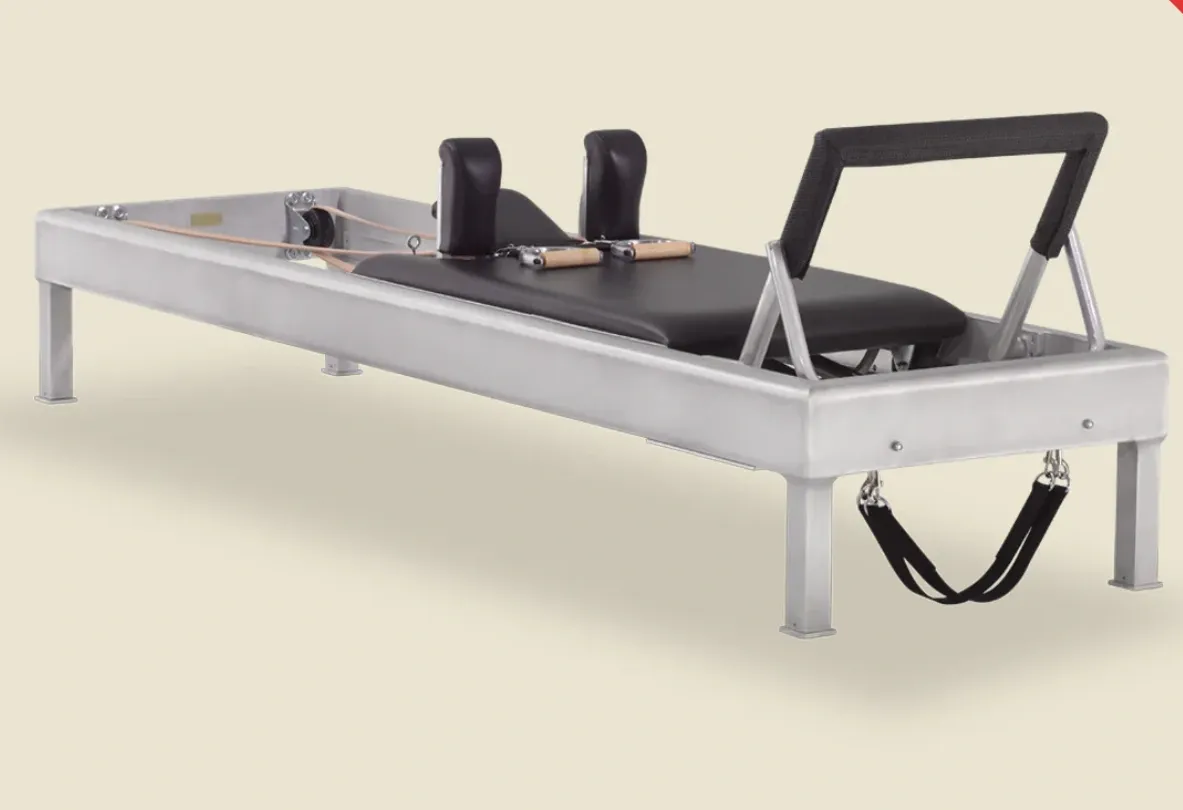
Joe Pilates’ original Reformer exercise order is more than a sequence—it’s a deliberate roadmap to physical reformation. Tracking down this elusive “Order of the Universe” is a quest for Pilates purists, revealing the genius behind Joe’s method. As a practitioner, I’ve found that this order transforms workouts into a seamless, purposeful flow that demands commitment and rewards discipline. Let’s explore why this sequence matters, how it guides the body, and why it’s worth the detective work.
Why the Order Matters
The beauty of Joe Pilates’ Reformer order lies in its structure. Once you start, there’s no pausing, no skipping, no half-measures. It’s a complete journey that compels you to finish what you began. Was this Joe’s master plan? I believe so. His sequence feels intentional, designed to challenge and connect every part of the body in a logical progression. And yes, an hour is enough to tackle nearly every exercise—if you stay focused and avoid dawdling.
This post dives into the original Reformer order, focusing solely on the exercises and their sequence, not on who should do them or when. Not every exercise is for every BODY. My goal is to uncover Joe’s super-objective: the reason behind his arrangement and how it shapes the body and effects the mind.
The Evolution of the Reformer Order
While Joe documented his Mat exercises clearly in Return to Life, the Reformer order is trickier to pin down. Despite his love for photography, the sequence has shifted over time, altered by various hands. Some changes are subtle; others render the order unrecognizable (contemporary Pilates). Without structure, isn’t that chaos? We will use the order taught to me by teachers who worked for year with Romana (Mejo Wiggin) who managed Joe Pilates studio after his death. Joe’s original intent shines through—a universal approach to human movement, distilled into exercises that maintain our body.
Below, I’ve outlined the Reformer exercises in the order I follow, informed by my training, and years of practice. Each exercise builds on the last, creating a full-body dialogue of extension, flexion, and rotation of the spine which leaves no muscle left behind and a lot of sweat.
The Reformer Exercise Order
Remember not every exercise is for every BODY
Footwork
The Footwork series is your entry point, bridging the outside world to your workout. The springs anchor you to the carriage, warming up the lower body while offering a rejuvenating foot massage. It’s the perfect segue into focus and presence.
The Hundred
With the lower body awakened, the Hundred shifts focus to the upper body. Vigorous movement and deep breathing fire up your core, setting the stage for what’s next. Together, Footwork and Hundred form a dynamic warm-up. If you do other types of exercise I hope you are doing a dynamic warm up.
Overhead
Starting in a position reminiscent to the Hundred, Overhead demands a warmed-up body. Footwork, and the Hundred prepare you for this full-body exercise, ensuring you’re ready to execute with control. This is an advanced exercise and is often replaced with short spine.
Coordination
Echoing the Mat’s Double Leg Pull, Coordination lengthens and contracts the body, enhancing the warm-up. It’s a precursor to the demanding Rowing series, refining your control and is one of the exercises with a distinct breathing pattern.
Rowing Series
Rowing is a powerhouse, connecting the upper body to the core. Exercises like Into the Sternum and 90° stretch the back, while From the Chest (breathe patterned exercise), From the Hips, Shave, and Hug build back strength and stretch your hamstrings. Its early placement ensures you’re fresh for the challenge.
Long Box 1: Swan, Pulling Straps, T
Swan kicks off Long Box 1 with a flowing movement with beautiful extension (often take over to a neighboring ladder barrel). Pulling Straps 1&2 refine upper body connection, anchoring the lower body while strengthening the back. It’s a full-body effort disguised as an upper-body focus.
Backstroke
Reiterating Rowing’s arm movements, Backstroke adds lower body reach. The added spring prepares you for the Teaser, challenging your coordination and strength. This exercise often seems to test everyone coordination at some point in their journey to learn pilates.It works your mind.
Teaser
The ultimate test of control, Teaser builds on Rowing’s connection, demanding a two-way stretch. It’s a pinnacle moment, testing your ability to integrate upper and lower body with control (the hard part)
Breaststroke/Horseback
A big, flowing extension movement, Breaststroke echoes Swan. The opposite of teaser offering extension of the spine. Supported lower body while the upper body resists gravity and rises up. It’s followed by Horseback which puts you back in flexion but without a supported lower body.
Long Stretch Series
This series shifts focus to the lower body, with the upper body as balance. Long Stretch (isometic core work), Down Stretch (extension and a lot of booty work) , Up Stretch (strength and mobilty work), Elephant (a stretch of the hamstrings and a lot of low stomach work), and Long Back Stretch build strength and a stretch of the chest culminating in a recap of lower body connection.
Stomach Massage Series
Regrouping after Long Stretch, this series revisits Footwork’s lower body action in an upright position. Round, Arms Back, Reach, and Twist introduces rotation, challenging your lift and control.
Tendon Stretch
A fierce return of the Elephant, Tendon Stretch tests your lower body connection to your core. One-leg variations showcase your progress and control (you might have heard the cue “heels down” a time or two), building on Elephant, Long Back Stretch, and Stomach Massage.
Short Box Series
The workhorse of the Reformer, Short Box delivers a sweaty challenge. Round, Reach, Side to Side, Twist and Reach, and Around the World target core strength, side bending, and rotation, culminating in Tree—a preview of High Bridge.
Short Spine Massage
After Short Box’s intensity, Short Spine Massage offers a deep stretch. Placed here, it maximizes flexibility when you’re warm, delivering on its “massage” promise.
High Frog, Semi Circle, Headstands 1+2
High Frog strengthens the lower body, Semi Circle recaps articulation, and Headstands test back and hamstring strength. These exercises build toward unsupported control.
Chest Expansion, Thigh Stretch, Backbends
Chest Expansion revisits Pulling Straps upright, Thigh Stretch preps for backbends, and Backbends push hip and back strength. Each builds on the last, culminating in a challenging peak.
Arm Circles/Swakate, Snake/Twist, Headstand with Straps (aka Wrestler Bridge)
These exercises test full-body integration. Arm Circles challenge strength and stability, Snake/Twist revisits Elephant’s lower body focus flowing from flexion to extension, and Headstand with Straps demands flexibility, strength and control in extension.
Interlude: Corkscrew/Tic Toc, Balance Control Off
Corkscrew and Tic Toc recover from Snake, and challenge your ability to rotate while Balance Control Off test your ability to lift your hips and control
Long Box 2
Swan, Grasshopper, Rocking, Swimming push your flexibility and strength with minimal support.
Short Box Series
The workhorse of the Reformer, Short Box delivers a sweaty challenge. Round, Reach, Side to Side, Twist and Reach, and Around the World target core strength, side bending, and rotation, culminating in Tree—a preview of High Bridge
Long Spine Stretch
A strength exercise despite its name, Long Spine Stretch demands length, control, and the ability to lift your hips. It’s a test of endurance after the interlude, with straps offering minimal support.
Mermaid
A gentle side-body exercise, Mermaid offers a breather between high-energy moves. It strengthens the side body, prepping for upcoming challenges.
High Bridge
High Bridge leverages your warmed-up body for a backbend, setting up the Knee Stretch series as a recovery system.
Kneeling Knee Stretches
The “beginning of the end,” these exercises demand stamina. They’re a final push before the cooldown.
Running
Running returns you to Footwork’s starting point, letting you check in with your body. It’s a moment to reflect on your progress and catch your breath.
Pelvic Lift, Control Push Ups, Side Splits, Front Splits, Russian Splits, Big Splits
These final exercises lengthen and strengthen, culminating in Big Splits’ ultimate control. Side Splits and Russian Splits test integrity, while Control Push Ups echo Long Stretch.
Russian Squats
A strength-intensive finale, Russian Squats demand a spotter for safety. Strength, Stretch and Control! The control is the hard part.
Variations and Insights
The order above reflects my current practice, shaped by Chris Robinson, Juan Estrada at Real Pilates and Mejo Wiggins. Variations exist—Romana sometimes placed Short Box after Long Box 1 , while others flip Short Box and Long Box 2. Short Spine Massage, often taught early in intermediate levels, shines later when the body is pliable in advanced parcticioners. It often swapped with Overhead. These shifts highlight Pilates’ adaptability, responding to the body in front of you.
Final Thoughts
Joe Pilates’ Reformer order is a testament to his vision—a universal system that transforms the body through intention and flow. Each exercise builds on the last, creating a workout that’s both challenging and rewarding. Whether you’re a detective seeking Joe’s original intent or a practitioner embracing the journey, this order offers a path to strength, control, and discovery.
Ready to dive in? Follow this sequence, feel the flow, and let Joe’s genius guide you.