
Where Did All the Well-Trained Teachers Go?
A History of Pilates Teacher Training
If you’ve spent any real time in classical Pilates, you’ve probably noticed the same thing we have: it is getting harder to find a teachers who was actually teaches Pilates— not a group fitness teacher, but trained individualize the system. That gap didn’t happen by accident. It’s the result of nearly a century of change in how Pilates teachers are made, and understanding that history is the best way to know what you should actually be looking for when you choose a studio, a teacher, or a training program.
In Joseph Pilates’ Time: There Was No Program
Joseph Pilates never ran a certification course. There was no manual, no curriculum, no exam. If you wanted to teach, you earned it by being in the room — for years. His original studio, above a boxing gym on Eighth Avenue in New York, produced a small handful of people history now calls the “Elders”: Romana Kryzanowska, Kathy Grant, Lolita San Miguel, Carola Trier, Ron Fletcher, Bruce King, Eve Gentry, and a few others. Each of them came to Joe through dance or through injury, spent thousands of hours training and observing in his studio, and only then were trusted to work with clients themselves.
Kathy Grant’s path is a good example of how demanding this actually was. A dancer who was referred to Joe for knee rehabilitation, she began assisting at Carola Trier’s studio and, in 1964, entered a formal apprenticeship through the New York State Vocational Rehabilitation Program that required roughly 2,200 hours of supervised observation and practice before she was certified. She and Lolita San Miguel are generally considered the only two people certified to teach directly by Joseph Pilates himself. That is the baseline this profession was built on: thousands of hours, one-on-one, before you were allowed to touch a client.
Romana’s Time: Apprenticeship, Formalized
After Joe passed away in 1967, Romana Kryzanowska took over his original studio and became the person most responsible for carrying the method into the next generation. For decades, her “program” was still fundamentally an apprenticeship — you trained at the studio, you observed for hundreds of hours, you were corrected constantly, and you were allowed to teach only once Romana herself decided you were ready. There was no written manual behind any of this. The knowledge lived in her body, her cueing, and her willingness to keep correcting you until you got it right.
That started to change in the early 1990s, when the Pilates world began to formalize for the first time.
The Manual That Changed Everything: Bob Liekens
In 1993, Bob Liekens — a Belgian dancer who had trained under Romana since the 1980s and had been teaching at her studio since 1986 — sat down with her, at her own kitchen table, to co-write what became the first true classical Pilates teacher training manual. For about a year, the two of them went through every single exercise, one at a time, translating decades of Romana’s oral, hands-on knowledge into something that could actually be taught systematically. Liekens also helped originate the exam system that came with it.
This was a genuinely important moment for the method. For the first time, there was a structured, repeatable way to pass on classical Pilates that didn’t depend entirely on years of informal apprenticeship with one specific teacher. It made training more consistent — and it made it possible to scale.
That scalability is exactly what the industry eventually ran with, for better and for worse.
From Manual to Marketplace
Once a training manual existed, teacher training could become a program — and once it was a program, it could become a business $$$. Over the following three decades, “getting certified in Pilates” moved from a multi-year apprenticeship to a menu of weekend intensives, online modules, and quick-turnaround comprehensive programs offered by dozens of competing schools, many with little to no connection to Joe, Romana, or the Elders at all.
That shift has real consequences. A teacher training certificate today can mean anywhere from a genuinely rigorous 18–24 month comprehensive program with hundreds of supervised teaching hours, to a few long weekends and an open-book test. Both come with a certificate you can frame. Only one of them produces a teacher who can safely and effectively run a client through the full classical apparatus system — Reformer, Cadillac, Wunda Chair, High Chair, Ladder Barrel, Spine Corrector, and the rest — and actually see what a body needs in real time.
This is the heart of the “lack of well-trained, comprehensive teachers” problem so many studio owners and clients quietly complain about. It isn’t that people aren’t getting certified. It’s that certification and competence quietly became two different things, and the industry has very little incentive to point that out to you.
Coming Back Around: Why the Apprenticeship Model Still Matters
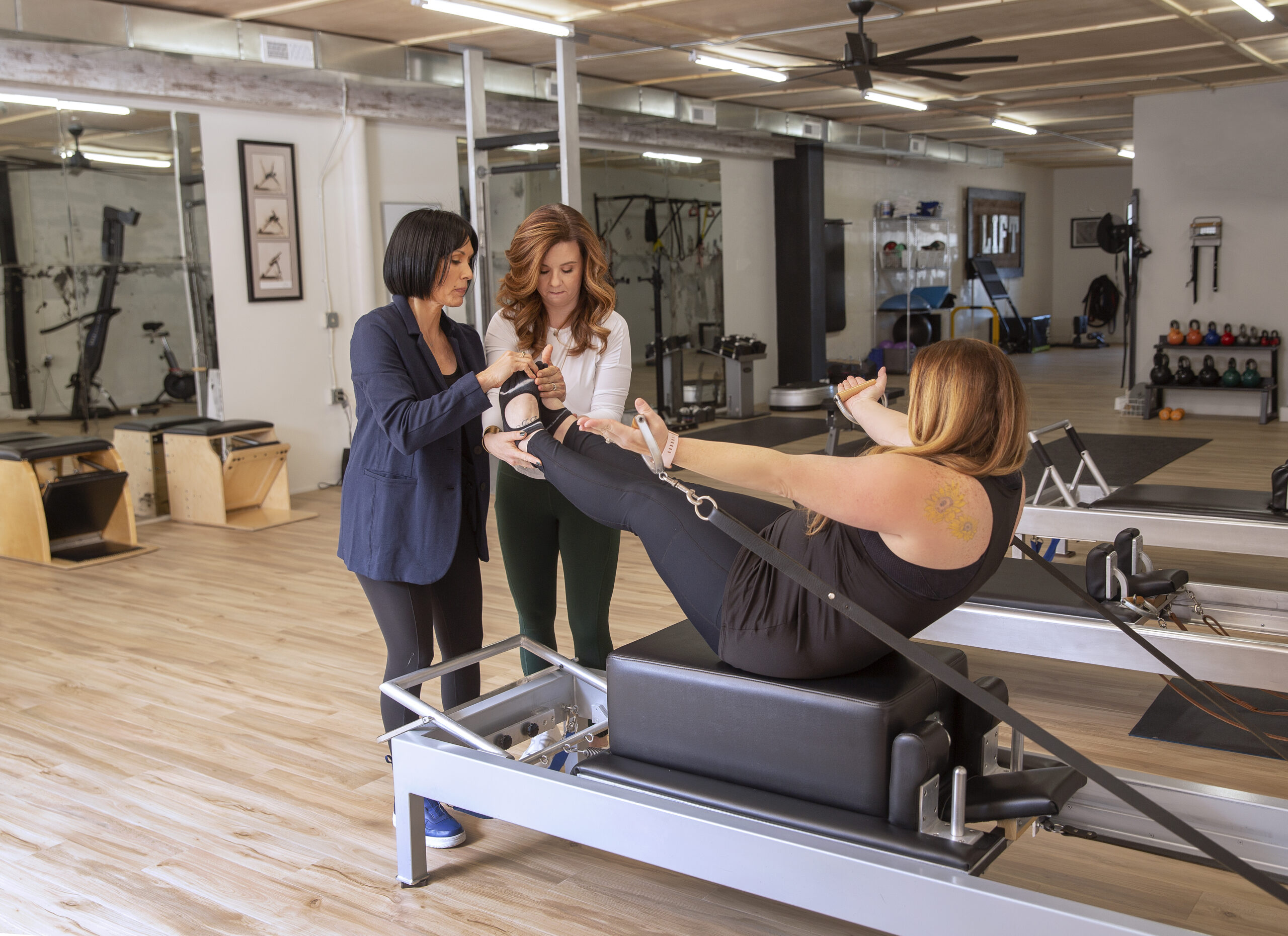
Which is why so many of the most respected teachers in the classical world still teach the same way Joe and Romana did — through apprenticeship, not just coursework. A manual can tell you what the Hundred is. It can’t teach you to feel, in your hands, that a client’s shoulder is about to compensate before it happens. That only comes from hours and hours of supervised teaching, under someone who has done it long enough to catch what you can’t yet see.
Dorothee VandeWalle is one of the clearest living examples of this lineage still at work. Originally a dancer from Belgium, she began teaching alongside Romana in New York in the 1980s, at a time when — by her own account — there was no certification program at all; it was simply apprenticeship, side by side. She went on to become one of Romana’s teacher trainers for over a decade before founding her own comprehensive certification, M.A.T. Pilates (Metropolitan Authentic Training), out of her studio in Seattle. Decades later, she is still there, still personally training teachers the demanding, hands-on way she was trained herself — small cohorts, selective admission, real apprenticeship hours, not a weekend certificate mill. She is, in a very real sense, still teaching teachers the way Romana taught her.
That thread — Joe to Romana to Liekens’ manual to VandeWalle and teachers like her — is the actual lineage of classical Pilates education. It’s also the honest answer to “how do I know if a certification is any good”: ask who trained the trainer, and how many supervised hours actually stood behind the piece of paper. Ask them, “Who taught you that?”- Mejo Wiggin
Why This Matters for You as a Client
Here’s the practical difference this history creates today, and it’s a big one: a teacher who came up through a genuine classical, comprehensive apprenticeship — the kind that traces back to this lineage — can walk into almost any authentic classical Pilates studio in the world and teach competently on the full apparatus system. They can always answer the question, “Who taught you that?”
A certification from a proprietary studio-brand system — think Lagree, or a Club Pilates-style franchise model — is a different thing entirely. Those certifications are built to produce teachers for that specific brand’s format and equipment, and they’re genuinely useful there. But they don’t transfer. A Club Pilates-certified instructor isn’t trained on the Cadillac, the Wunda Chair, or the Ladder Barrel, because that system doesn’t use them. It isn’t a knock on those formats — they’re built for a different purpose. It just means the certification is a brand credential, not a classical Pilates credential, and it can’t be swapped between studios the way genuine comprehensive training can.
So the next time you’re choosing where to train, or where to work out, that’s really the question underneath all of it: was this person apprenticed into the method, or trained to run one company’s machines? Nearly a hundred years after Joe Pilates started doing this above a boxing gym, that’s still the difference that matters.
At Aspen & Pine Pilates, we believe in that original standard — full classical apparatus, real apprenticeship, and teachers trained to the tradition Joe, Romana, and Kathy Grant built. It’s why we teach the way we do, and why our own teacher training holds to it.