How “Pilates” Became a Generic Term — And Why the Name Alone Doesn’t Guarantee the Method
Today, the word Pilates is often used as a marketing tool. It carries brand recognition, cultural credibility, and commercial appeal. From boutique franchises to big-box gyms, attaching the word “Pilates” to a class can increase perceived value and revenue. Pilates is popping up everywhere, even inside big box gyms as they fight for gym member retention. But marketing value and integrity are not the same thing.
Joseph Pilates did not call his work Pilates. He called it Contrology—a time-tested system built on precision, progressive resistance, spinal articulation, and disciplined movement. Contrology was designed to generate measurable results: improved posture, strength, mobility, coordination, and resilience. When the word Pilates is applied to exercise formats that substantially alter the structure, apparatus, or principles of the original system, the outcome is often a product that generates revenue—but not results equivalent to authentic classical Pilates. Understanding how the term became generic explains why experiences vary so widely today.
From Contrology to Pilates
Joseph Pilates developed his system in the early 20th century and called it Contrology—the coordination of body, mind, and spirit through controlled, precise movement. His work was structured and progressive. It relied on specific apparatus with defined dimensions and calibrated spring tensions. Exercises followed a deliberate order designed to build strength and mobility systematically. Over time, students and the public began referring to the work by his surname. As the system expanded, Pilates became the commonly used name.
The Trademark Ruling
For a period, exclusive rights to the name Pilates were claimed in the United States. However, by the late 1990s, the term had entered common language. In 2000, a U.S. federal court ruled that Pilates is a generic term—meaning it identifies a type of exercise rather than a specific brand or source. No single organization controls how the word is used. As a result, anyone may advertise Pilates classes, regardless of adherence to the original method.
What This Means for Students
Because the term is generic:
- Any studio or instructor may advertise Pilates
- The name does not guarantee a specific training lineage
- Educational standards vary widely
- Teaching approaches can differ significantly
Some programs preserve Joseph Pilates’ original system. Others combine fitness trends, choreography-driven classes, or modified equipment. The shared name does not ensure a shared method or that you are doing anything close to the original system of exercises. Being on the pilates apparatus does not mean you are doing real pilates.
Why the Distinction Matters
When foundational principles—exercise order, spring loading, apparatus dimensions, spinal mechanics, and progression protocols—are replaced or substantially modified, the work becomes an interpretation inspired by Pilates rather than the classical system itself. Or at times aerobic on the pilates apparatus.
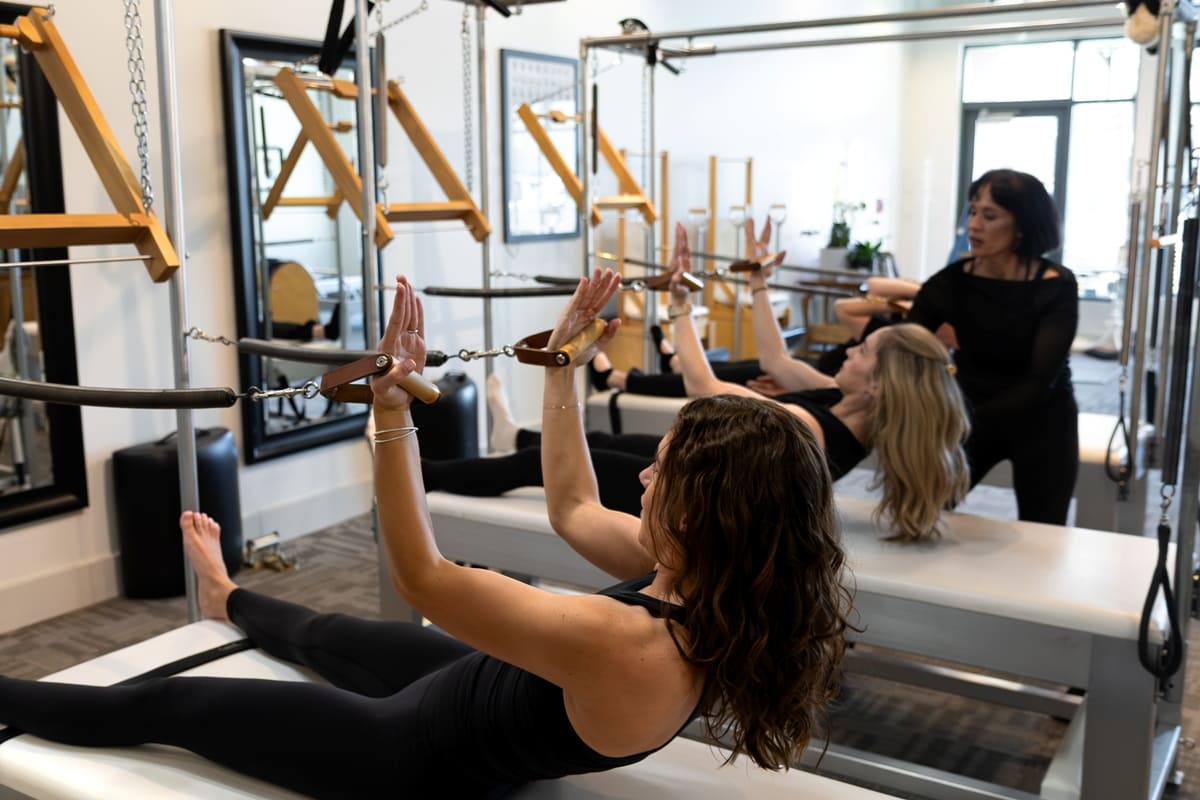
At Aspen & Pine Pilates in Helena, Montana, we teach authentic classical Pilates within a fully equipped studio (pilates is more than the reformer). That distinction is intentional. Teaching and the “pilates” method requires education, not branding and a fully equipped studio.
Credentials Matter. Practice Alone Is Not Enough.
There is a growing misconception in the industry that personal practice, enthusiasm, or learning by observation is sufficient preparation to teach. It is not. Self-practice is essential. Observation is valuable. Continuing education is critical.
But none of these replace structured certification, documented mentorship, and extensive supervised teaching hours with real clients.
A qualified classical instructor should have:
- A comprehensive certification program with defined hour requirements
- Supervised apprenticeship teaching
- Formal evaluation and testing
- Documented lineage
- Ongoing continuing education
When you place your spine, joints, and long-term strength in someone’s hands, you deserve more than passion. You deserve a paper trail.
Aspen & Pine Pilates is owned and operated by Juanita Ostrem, whose background bridges exercise science and authentic classical Pilates. Her credentials include:
- NSCA Certified Personal Trainer
- NSCA Personal Trainer of the Year Nominee (2007)
- Bachelor of Science in Chemistry
- Former personal training studio owner
- Decades of strength and conditioning experience
Her classical Pilates education reflects structured mentorship and documented lineage, including:
- Peak Pilates Level III Certification
- Apprenticeship with Chris Robinson
- Classical Syllabus mentorship with Mejo Wiggin followed by Beyond the Syllabus
- Advanced reassessments and intensives at Real Pilates NYC
- “Old School at the Ranch” with Kathryn Ross-Nash
- Scoliosis Workshop with Sonje Mayo
- US Pilates Association Workshop (2024)
- Ongoing advanced continuing education
This represents years of structured study, supervised client instruction, formal evaluation, and continued refinement.
An Educated Student Is an Empowered Student
Before choosing where to practice, ask direct questions:
- Where did you complete your certification?
- How many hours were required?
- Was there supervised teaching?
- Who were your mentors?
- Do you pursue ongoing continuing education?
If the answers are vague, that is meaningful. The name Pilates alone does not guarantee the method. The teachers lineage, the education, and the documented training do. Ask Ask Ask!
You only have one body. Choose a teacher whose qualifications are as disciplined as the method itself.