
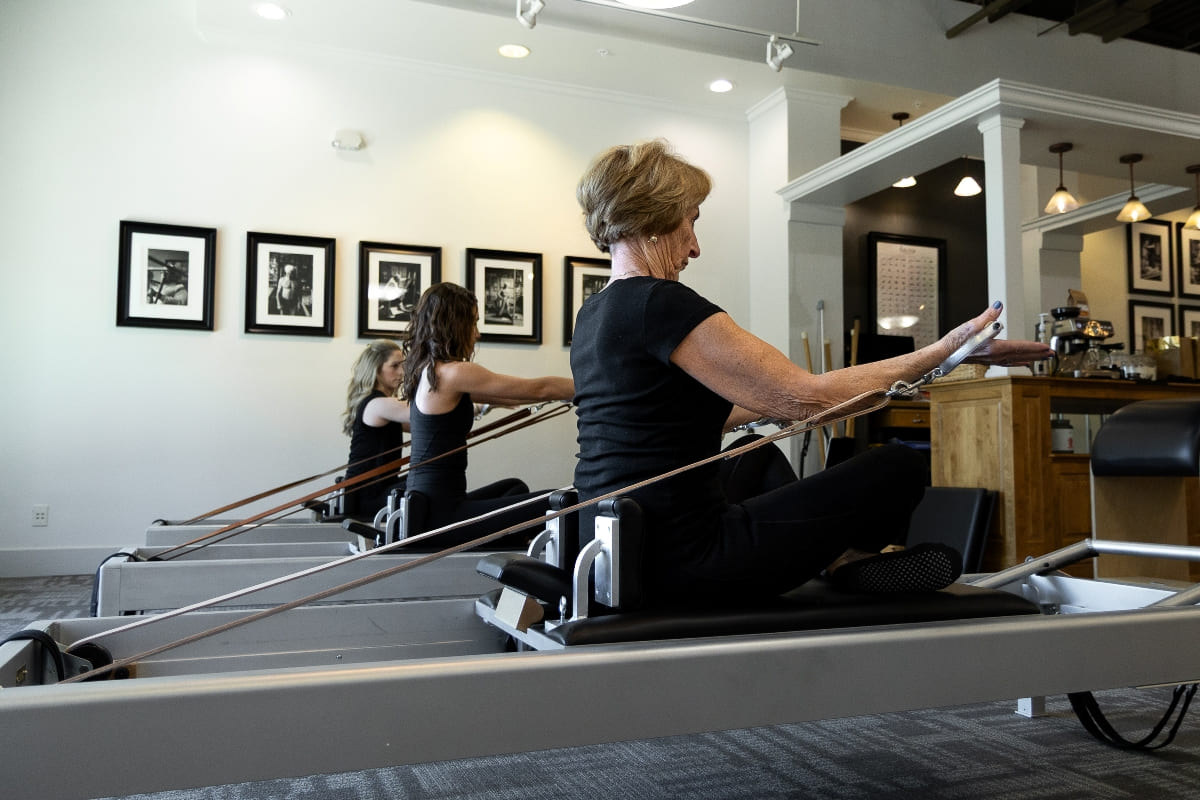
There’s a quiet shift happening in the Pilates world. More and more studios are embracing the word Classical in their branding — a sign of respect for the method’s roots and a desire to reconnect with Joseph Pilates’ original intent.
The intention is positive. But if you’ve ever noticed that Pilates feels different from studio to studio — even when you’re doing the same exercises — there’s a reason for that.
Classical Pilates isn’t just a series of movements; it’s a complete system. Every spring, strap, and apparatus was designed to work together in precise harmony. That precision is what made the original method so powerfully effective — it changed bodies efficiently because the geometry, resistance, and feedback were consistent across the system.
Over time, as Pilates evolved into group fitness and contemporary formats, the equipment evolved too. Carriages became longer, footbars adjustable, springs color-coded. These innovations made Pilates more accessible to more people — which matters — but they also changed how the method works on the body.
At Aspen & Pine Pilates, we often say, “Feel the difference.”
That difference isn’t just about sensation — it’s about efficiency.
Here’s why doing Classical exercises on Contemporary apparatus naturally creates a different experience and outcome:
1️⃣ Spring Tension
On Classical reformers, all springs are equal in strength and length. This creates a predictable, symmetrical resistance that forces the body to organize movement through the powerhouse — not just through the limbs.
When springs are mixed (as in many contemporary models), the resistance distribution changes. This makes it easier to keep everyone moving together in a group setting, but it subtly shifts effort away from the center. The result? A group movement workout thatmay feel more accessible, but less individualized and transformative in how deeply it strengthens and reshapes the body.
2️⃣ Dimensions and Geometry
The geometry of the apparatus — the frame height, carriage length, and especially the angle of the footbar — dictates alignment, leverage, and muscular engagement.
On Classical reformers, the steeper footbar angle and specific carriage height are intentional. They position the body in a way that naturally activates deep stabilizers, aligning the spine and joints for efficient movement.
Flatten the footbar, extend the carriage, or change the frame height — and that efficiency is reduced. The exercise still “works,” but not in quite the same integrated, body-changing way.
3️⃣ Straps, Risers, and Pathway
In Classical setups, the strap path is fixed — typically lower and shorter — creating a precise pull that drives power through the centerline.
Adjustable risers on contemporary reformers make it easy to modify for body size and comfort, but those few inches of difference shift the vector of resistance. That alters muscle recruitment and the intended challenge. Over time, this can change how effectively the method sculpts and organizes the body. While if teaching groups does allow for everyone to do choreography together.
4️⃣ Wunda Chair Size and Pedal Angle
The original Wunda Chair is compact, close to the floor, and angled to challenge lift and control. Its smaller size and steeper pedal demand stability through the core and back line — teaching the deep connections that make the entire system work. The chair is small for a reason. It created a need for your spine to bend and articulate.
5️⃣ System vs. Isolation
In a Classical studio, the entire apparatus family — reformer, Cadillac, chair, barrels — works together as one system. When a movement is challenging, the teacher shifts you to a complementary apparatus to build the skill that will unlock the exercise elsewhere.
In group contemporary formats, the goal is often to keep everyone moving together, so the reformer becomes a one-stop tool. It’s excellent for rhythm and flow but can’t replicate the system’s layered progression and resistance training component is lost. — the very structure that made Classical Pilates so efficient at changing the body. Pilates is a system of exercise using springs for resistance training.
The Bottom Line
This isn’t about hierarchy — Classical vs. Contemporary — but about clarity.
When you change the apparatus, you change the conversation between the body and the work. And with it, you change how efficiently Pilates can reshape posture, strength, and alignment.
Neither version is better or worse.
Just different.
But if you’ve ever wondered why the Classical system feels so potent, it’s because every inch, every spring, and every angle was designed to transform the body — efficiently, intentionally, and completely.